English
- English
- Español
- Português
- русский
- Français
- 日本語
- Deutsch
- tiếng Việt
- Italiano
- Nederlands
- ภาษาไทย
- Polski
- 한국어
- Svenska
- magyar
- Malay
- বাংলা ভাষার
- Dansk
- Suomi
- हिन्दी
- Pilipino
- Türkçe
- Gaeilge
- العربية
- Indonesia
- Norsk
- تمل
- český
- ελληνικά
- український
- Javanese
- فارسی
- தமிழ்
- తెలుగు
- नेपाली
- Burmese
- български
- ລາວ
- Latine
- Қазақша
- Euskal
- Azərbaycan
- Slovenský jazyk
- Македонски
- Lietuvos
- Eesti Keel
- Română
- Slovenski
What Are The Safety Precautions When Using an Air Hammer?
Introduction
What Are The Safety Precautions When Using an Air Hammer? This question is frequently raised by professionals in metal fabrication, automotive repair, construction, shipbuilding, and industrial maintenance. An Air Hammer is a high-impact pneumatic tool designed to deliver rapid blows for cutting, chipping, riveting, and shaping metal. While it offers exceptional efficiency, improper handling can lead to serious injuries, equipment damage, and productivity losses.
At Foshan WYMA Pneumatic Tools Co., Ltd., safety is considered an essential part of performance and durability. Based on decades of manufacturing and application experience, our factory focuses on combining stable power output, ergonomic design, and reliable materials to reduce operational risks in real-world working environments. Understanding safety precautions is not only about compliance, but also about protecting operators, extending tool life, and maintaining consistent work quality.
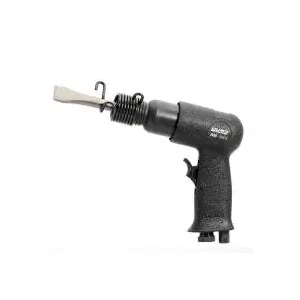
Table of Contents
- What Is an Air Hammer and Why Does Safety Matter?
- How Should Operators Prepare Before Using an Air Hammer?
- What Are the Correct Operating Safety Practices During Use?
- Summary
- FAQ
What Is an Air Hammer and Why Does Safety Matter?
An Air Hammer is a pneumatic impact tool that transforms compressed air into rapid, linear striking force. It is widely applied in automotive repair, metal fabrication, equipment maintenance, construction, and industrial assembly. Because the tool operates through continuous high-frequency impact, safety is not an accessory requirement but a core operational condition. Understanding why safety matters starts with understanding how the tool works, how force is generated, and how that force interacts with both the material and the operator.
How an Air Hammer Works from a Mechanical Perspective
An Air Hammer functions through a piston-driven mechanism housed within a cylindrical body. When compressed air enters the chamber, it pushes the piston forward at high speed. At the end of the stroke, air is redirected, forcing the piston backward and repeating the cycle. This back-and-forth motion occurs thousands of times per minute, transferring energy directly to the attached chisel or bit.
In practical use, this mechanism allows operators to break, cut, or shape materials with minimal manual force. However, every impact produces a reaction force that travels through the tool body. From our factory testing experience, this reaction force is the primary reason safety considerations must be integrated into both product design and daily operation.
Why High-Impact Operation Creates Inherent Safety Risks
Unlike rotary pneumatic tools, an Air Hammer delivers straight-line impact energy. This creates unique risks related to vibration transmission, recoil force, and sudden directional movement. Each impact cycle generates stress not only on the workpiece but also on the operator’s hands, wrists, and arms.
Common safety risks observed in improper use scenarios include:
- Loss of control due to excessive recoil or unstable grip
- Muscle fatigue and reduced precision caused by vibration exposure
- Eye and facial injuries from flying metal or material fragments
- Unexpected tool behavior resulting from incorrect air pressure
At Foshan WYMA Pneumatic Tools Co., Ltd., these risks are addressed during product development by focusing on internal balance, airflow stability, and ergonomic housing design. Our factory experience shows that controlling vibration and recoil is essential for predictable and safe operation.
The Relationship Between Safety and Performance Stability
Safety and performance are closely connected. When an Air Hammer is operated within safe parameters, it delivers consistent impact energy and predictable handling. This stability allows operators to maintain accuracy and efficiency without compensating for excessive vibration or uncontrolled movement.
Unsafe operation often leads to secondary performance problems, such as:
- Reduced working accuracy due to hand fatigue
- Increased tool wear caused by overpressure operation
- Higher downtime resulting from premature component failure
- Inconsistent surface finish or work quality
From our factory data, tools that are used according to safety guidelines demonstrate longer service life and lower maintenance frequency. This reinforces the idea that safety is not a constraint on productivity but a foundation for sustainable output.
Key Product Parameters That Influence Safety
Understanding technical parameters helps operators recognize why certain limits exist. These parameters are not arbitrary; they are defined to balance impact force, control, and durability. Below is a typical parameter overview that illustrates how specifications relate directly to safety performance.
| Parameter | Typical Range | Safety Relevance |
| Operating Air Pressure | 6.2 to 8.0 bar | Controls impact force and recoil stability |
| Blow Frequency | 2000 to 4500 BPM | Affects vibration level and operator fatigue |
| Stroke Length | 45 to 75 mm | Determines penetration depth and control |
| Tool Weight | 1.8 to 3.5 kg | Influences handling balance and grip stability |
| Air Consumption | 4 to 6 CFM | Ensures stable airflow and prevents pressure drops |
From our factory perspective at Foshan WYMA Pneumatic Tools Co., Ltd., maintaining these parameter ranges is essential for safe operation. Excessive pressure or mismatched air supply increases internal stress, amplifies vibration, and raises the likelihood of operator error.
Design and Manufacturing Responsibility in Safety Control
Safety begins during manufacturing. Material strength, machining accuracy, and internal tolerance control all influence how an Air Hammer behaves under load. Our factory emphasizes hardened internal components, consistent piston alignment, and smooth airflow channels to minimize unpredictable movement.
Key design elements that support safety include:
- Balanced piston weight to reduce recoil force
- Reinforced housing to withstand continuous impact cycles
- Stable air inlet design to prevent sudden pressure fluctuation
- Ergonomic grip geometry to support controlled handling
These features do not eliminate risk, but they significantly reduce the margin for error during operation.
Human Factors and Long-Term Safety Awareness
Even with proper design, the human factor remains decisive. Safety awareness includes understanding limitations, recognizing abnormal behavior, and responding immediately when conditions change. Many incidents occur during routine tasks when attention declines.
From our factory-supported training observations, reinforcing basic safety habits such as pressure monitoring, posture control, and attachment inspection greatly reduces incident rates. Over time, these habits protect both the operator and the tool.
Why Safety Matters Beyond Immediate Use
Safety is not limited to preventing immediate injury. Long-term exposure to vibration and noise can lead to chronic health issues if precautions are ignored. Similarly, repeated operation outside recommended parameters shortens tool lifespan and increases ownership costs.
When safety principles are respected, an Air Hammer delivers stable performance, predictable behavior, and reliable service over extended periods. This long-term reliability is the result of combining responsible operation with well-engineered manufacturing standards.
How Should Operators Prepare Before Using an Air Hammer?
Preparation is the most effective and often underestimated safety measure when working with an Air Hammer. Before any compressed air is connected or any impact is delivered, a structured preparation process sets the foundation for safe, stable, and efficient operation. From our factory experience, most preventable accidents are linked to insufficient preparation rather than tool defects.
Why Pre-Use Preparation Is a Critical Safety Step
An Air Hammer operates at high speed and high impact frequency, leaving little margin for correction once the tool is running. Proper preparation allows operators to identify potential risks in advance, ensuring that the tool, air supply, and working environment are aligned with safe operating conditions. At Foshan WYMA Pneumatic Tools Co., Ltd., our factory emphasizes preparation as a professional standard rather than an optional routine. Preparation minimizes uncertainty, reduces operator stress, and improves overall control during use.
Initial Tool Inspection and Condition Assessment
Before connecting the Air Hammer to an air source, operators should perform a thorough inspection of the tool itself. This inspection ensures that all components are in suitable condition to withstand repeated impact cycles.
Key inspection points include:
- Visual examination of the housing for cracks, deformation, or loosened fasteners
- Checking the trigger mechanism for smooth and responsive operation
- Ensuring the retainer or chuck securely holds the chisel or attachment
- Inspecting the air inlet threads for wear or contamination
From our factory testing data, minor issues such as worn retainers or loose housings can quickly escalate into safety hazards once impact force is applied. Early detection significantly reduces operational risk.
Preparing the Air Supply System
The air supply system is an integral part of the Air Hammer’s performance and safety profile. Improper air delivery can cause unstable impact force, excessive vibration, or sudden tool failure.
Operators should ensure:
- The air compressor output matches the recommended pressure range
- Air hoses are free from cracks, kinks, or leaks
- Couplings are securely connected and properly sealed
- The air supply is clean and dry to prevent internal corrosion
Our factory strongly recommends using regulated air systems to maintain consistent pressure. Unstable air pressure is a common cause of unpredictable tool behavior and increased wear.
Lubrication and Internal Readiness
Proper lubrication is essential for safe and smooth operation. Internal components move at high speed and rely on lubrication to reduce friction and heat buildup.
Before use, operators should:
- Add the recommended pneumatic oil to the air inlet
- Confirm that automatic oilers are functioning correctly
- Avoid over-lubrication, which may attract debris
From our factory observations, insufficient lubrication increases internal friction, leading to uneven piston movement and elevated vibration levels. Proper lubrication supports both safety and longevity.
Work Environment and Jobsite Preparation
A controlled work environment is essential for safe operation. Even a well-prepared tool can become hazardous in an unstable or cluttered workspace.
Environmental preparation should include:
- Securing the workpiece with clamps or fixtures to prevent movement
- Ensuring sufficient lighting for clear visibility
- Removing unnecessary tools and materials from the immediate area
- Establishing a safe distance for nearby personnel
Our factory guidance emphasizes reassessing the environment for each task, as conditions can change between operations.
Personal Readiness and Protective Equipment
Operator readiness plays a decisive role in safe use. Fatigue, distraction, or inadequate protection significantly increases accident risk.
Before starting work, operators should:
- Wear protective eyewear to guard against flying debris
- Use gloves designed to improve grip and reduce vibration transfer
- Ensure hearing protection is available in high-noise settings
- Avoid loose clothing that could interfere with tool movement
From our factory-supported training programs, consistent use of protective equipment reduces injury rates and improves operator confidence.
Pre-Use Parameter Verification
Verifying key operating parameters before use ensures the tool is matched to the task and environment.
| Preparation Item | Recommended Condition | Safety Purpose |
| Air Pressure Setting | Within rated operating range | Prevents excessive recoil and wear |
| Attachment Condition | No visible cracks or deformation | Reduces risk of detachment during impact |
| Lubrication Status | Properly lubricated | Ensures smooth internal motion |
| Workpiece Stability | Securely fixed | Prevents sudden movement |
| Operator Protection | Protective gear in place | Minimizes injury risk |
Preparation as a Professional Safety Culture
At Foshan WYMA Pneumatic Tools Co., Ltd., preparation is considered part of a professional safety culture. Our factory experience shows that when preparation becomes routine, safety becomes instinctive. Operators who consistently prepare their tools and environment work with greater confidence, stability, and efficiency. Effective preparation transforms the Air Hammer from a high-risk tool into a controlled and reliable instrument, setting the stage for safe operation and long-term performance.
What Are the Correct Operating Safety Practices During Use?
Once an Air Hammer is activated, safety depends primarily on correct operating practices. Unlike preparation, which is largely preventive, safe operation requires continuous awareness, proper technique, and immediate response to changing conditions. From our factory application feedback, most operational incidents occur not because of tool failure, but because safety discipline declines during active use.
Maintaining Proper Grip and Body Position
Correct handling begins with posture and grip. An Air Hammer generates repeated impact forces that travel through the tool body, making stability essential. Operators should maintain a balanced stance, with feet firmly positioned to absorb recoil and prevent loss of control.
Proper handling practices include:
- Holding the tool firmly with both hands when possible
- Keeping wrists in a neutral position to reduce strain
- Aligning the tool with the work surface to prevent deflection
- Avoiding overreaching or awkward angles during operation
From our factory observations, incorrect posture significantly increases vibration transfer and fatigue, leading to reduced reaction time and higher accident risk.
Controlling Air Pressure During Operation
Air pressure control is a critical safety factor while the Air Hammer is in use. Sudden pressure fluctuations can cause unpredictable impact force, making the tool difficult to control.
Operators should follow these guidelines:
- Use a pressure regulator to maintain stable air supply
- Never exceed the recommended operating pressure
- Monitor pressure gauges during extended use
- Release air pressure before adjusting or changing attachments
Our factory data shows that overpressure operation increases internal stress, accelerates wear, and amplifies recoil. Consistent pressure control ensures predictable tool behavior.
Managing Vibration and Fatigue
Vibration is an inherent characteristic of impact tools. While it cannot be eliminated, it can be managed through correct usage habits. Prolonged exposure to vibration can reduce grip strength and lead to long-term health issues.
Effective vibration management practices include:
- Limiting continuous operation time
- Taking scheduled breaks during extended tasks
- Using gloves designed to reduce vibration transfer
- Switching hands when possible to distribute load
From our factory-supported field studies, operators who manage vibration proactively maintain better control and experience fewer fatigue-related incidents.
Attachment Use and Tool Bit Safety
Attachments play a direct role in operational safety. Using incorrect or damaged chisels can result in unexpected deflection or breakage.
Safe attachment practices include:
- Using only attachments compatible with the tool model
- Inspecting tool bits for cracks or deformation before use
- Ensuring the retainer mechanism is fully engaged
- Avoiding excessive force that may bend or fracture the attachment
Our factory strongly advises against modifying attachments, as alterations compromise structural integrity and increase failure risk during high-impact operation.
Monitoring Tool Behavior During Use
Continuous monitoring of tool behavior is essential. Changes in sound, vibration, or responsiveness often indicate underlying issues that require immediate attention.
Operators should stop operation if they notice:
- Unusual noise or rattling
- Sudden increase in vibration
- Loss of impact power
- Air leakage from unexpected areas
From our factory experience, early response to abnormal behavior prevents minor issues from escalating into serious safety hazards.
Operating Within Defined Parameters
Safe operation requires adherence to defined technical parameters. These limits are established to balance impact force, control, and durability.
| Operational Factor | Recommended Practice | Safety Benefit |
| Operating Duration | Short, controlled intervals | Reduces fatigue and overheating |
| Air Pressure Stability | Constant regulated supply | Prevents unpredictable recoil |
| Attachment Alignment | Straight and centered | Improves control and accuracy |
| Operator Focus | Continuous attention | Allows immediate response to risk |
| Environmental Awareness | Clear surroundings | Reduces secondary accident risk |
Safe Interaction with Surroundings
Operational safety extends beyond the tool itself. Operators must remain aware of their surroundings, including nearby personnel and equipment. Flying debris and sudden tool movement can pose risks to others in the area. Our factory safety guidance recommends establishing clear safety zones and maintaining communication with team members during operation.
Building Safe Operating Habits
At Foshan WYMA Pneumatic Tools Co., Ltd., safe operation is viewed as a habit developed through consistent practice. Our factory feedback shows that operators who follow disciplined operating routines experience fewer incidents and achieve more consistent results. Correct operating safety practices transform the Air Hammer from a powerful tool into a controlled and reliable instrument. When these practices are followed, productivity, safety, and tool longevity work together to support professional performance.
Summary
What Are The Safety Precautions When Using an Air Hammer? The answer lies in preparation, proper operation, and understanding product parameters. Safety is not a single action but a system built on awareness, discipline, and reliable equipment.
Foshan WYMA Pneumatic Tools Co., Ltd. remains committed to delivering tools that support safe and efficient work. Our factory integrates strict quality control, stable design, and practical user feedback into every Air Hammer we produce. By following professional safety practices, operators can achieve long-term performance and reduced risk.
For businesses seeking dependable pneumatic tools with consistent safety standards, our team welcomes inquiries and technical discussions. Choosing the right supplier is the first step toward safer and more productive operations.

FAQ
Q1: What Are The Safety Precautions When Using an Air Hammer in industrial environments?
Industrial environments require controlled air pressure, proper protective equipment, stable workpiece positioning, and regular tool inspection to minimize risks associated with high-impact operation.
Q2: What Are The Safety Precautions When Using an Air Hammer to prevent vibration injuries?
Operators should limit continuous usage time, use vibration-reducing gloves, maintain correct posture, and select models with balanced internal structures.
Q3: What Are The Safety Precautions When Using an Air Hammer related to air supply systems?
Using regulated air pressure, leak-free hoses, proper lubrication, and pressure release before maintenance ensures stable and safe operation.
Q4: What Are The Safety Precautions When Using an Air Hammer during long-term projects?
Regular breaks, tool temperature monitoring, and routine maintenance checks help prevent fatigue-related accidents and equipment wear.
Q5: What Are The Safety Precautions When Using an Air Hammer for different materials?
Matching the tool parameters and attachments to material hardness prevents uncontrolled impact force and improves operational precision.
Related News
- Why Is a Manual Air Pressure Spray Paint Tank the Best Choice for Consistent and Professional Coating Results
- How Can a 20L/5gal Pneumatic Grease Pump Improve Industrial Lubrication Efficiency
- How Can a Short Nozzle Air Blow Gun Improve Industrial Cleaning Efficiency and Precision
- How Can a 3/8 Inch Air Drill Improve Your Industrial Drilling Efficiency and Precision
- Is a 3/8 inch Air Drill the Best Choice for Precision and Power in Modern Workshop Applications
- Why Is a PP Plastic Pneumatic Diaphragm Pump the Ideal Solution for Chemical and Industrial Fluid Transfer
Leave me a message