


Application of pneumatic sanders
Pneumatic sanders are tools used for surface treatment, polishing and grinding, and are commonly used in automobile repair, metal processing, woodworking and furniture manufacturing.


Product Category
Product Category
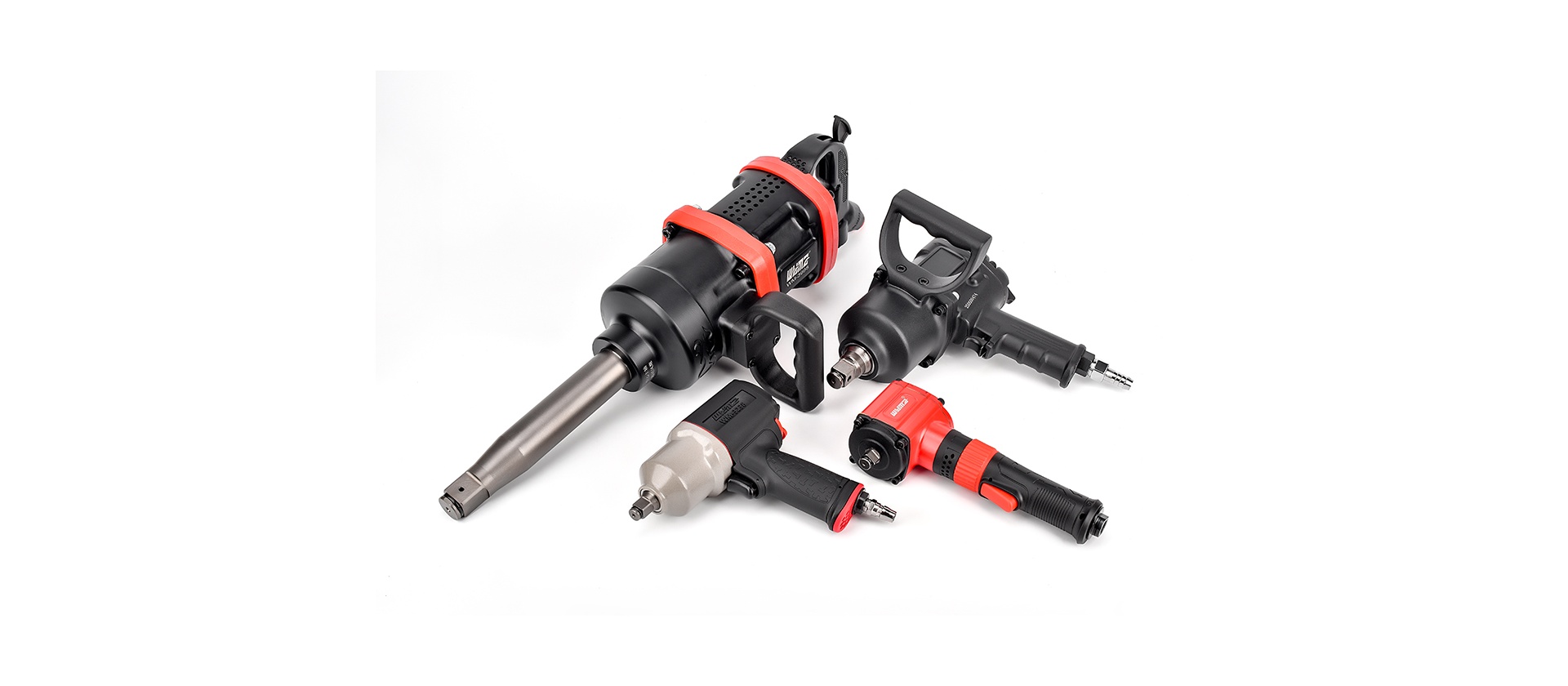
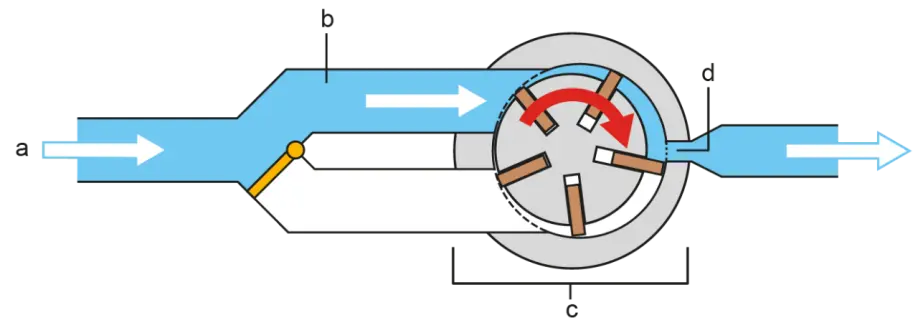
WYMA® provides durable air impact wrenches that ship in bulk at direct factory prices. This tool relies on compressed air which allows you to spin high-torque nuts and bolts into place or loosen them quickly. The impact mechanism remains the most critical component. Its working principle and process: The moment you pull the trigger, compressed air fills the cylinder and forces the internal vane motor to rotate at high speeds. This rotation then carries power through the planetary gear which drives the impact mechanism. There is a hammer and an anvil inside the impact mechanism. The hammer is repeatedly pulled up and accelerated during rotation, and after accumulating kinetic energy, it is suddenly released, instantly hitting the anvil with huge force. This "knocking" impact will produce an instantaneous burst of huge torque. This torque far exceeds the continuous torque of the motor itself, allowing the wrench to easily cope with high-tightness bolts and nuts.
Our impact wrenches are categorized into the Regular, Right Angle, and Ratchet series. The Regular series comes in four sizes: 3/8", 1/2", 3/4", and 1". Technicians who manage motorcycle repairs or run workshop assembly lines prefer the 3/8" and 1/2" models for their small-scale tasks. What should you use for ship assembly or heavy-duty vehicle manufacturing? The 3/4" and 1" sizes provide the high torque that large-scale industrial installations and heavy machinery repairs demand. If you encounter a cramped space that a standard wrench cannot reach, the Right Angle and Ratchet series allow you to tighten nuts and bolts in those challenging spots. Our pro service team can answer any further questions you have about these tools.
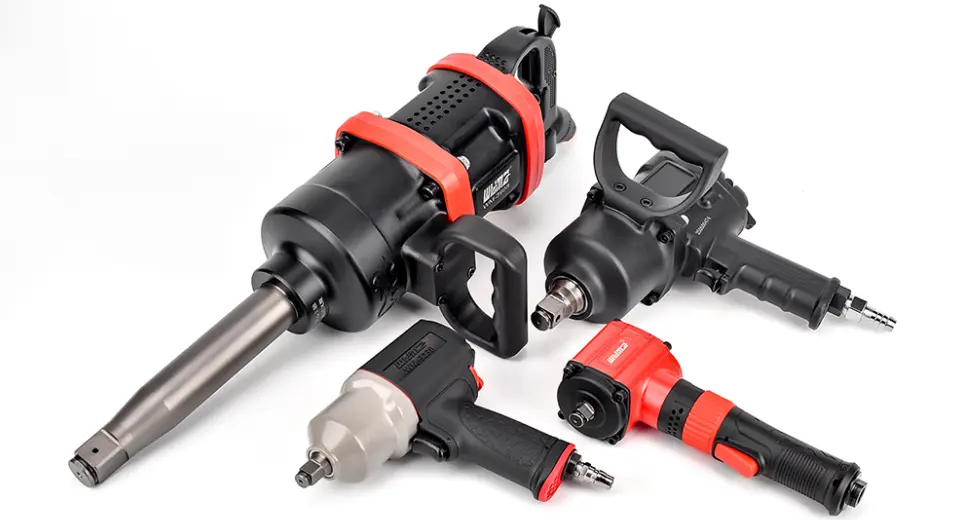
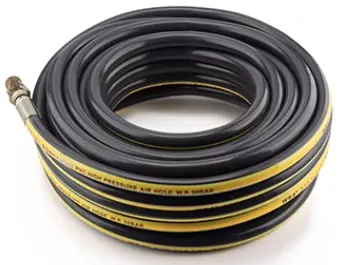
Our products adopt an embedded cylinder design with strong air pressure and great power. Its core dual-hammer pinless impact mechanism is made of forged alloy steel made by CNC heat treatment process. The body is made of lightweight plastic steel, which greatly reduces the weight of the body. It can also achieve three-speed forward and reverse torque adjustment, easily cope with various tasks, and will not tire your hands after long-term work. It is equipped with a silencer exhaust hole to quickly reduce working noise, and is suitable for various sizes such as 3/8", 1/2", 3/4", 1" and various types of sockets: internal hexagon, external hexagon, slotted, cross and torx. We also provide replaceable accessories: thickened high-pressure and explosion-proof air hoses made of PVC braiding process and various sizes and types of sockets mentioned above.
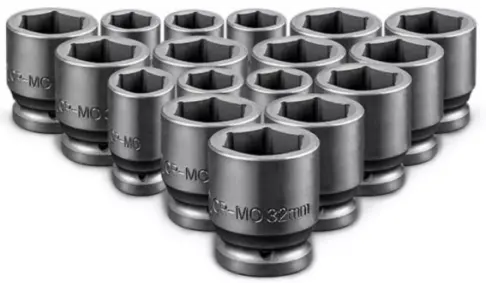
Its three key parameters that determine how the tool performs in the field include Bolt Capacity, Max Torque, and Square Drive Size. Bolt Capacity identifies the maximum diameter of the fasteners that the impact wrench can tighten or loosen effectively. This parameter is typically expressed in millimeters and generally reflects the wrench's actual working range and applicability. What happens if you attempt to turn a bolt that exceeds this limit? You will likely damage the internal mechanism or even failure to complete the task entirely because the wrench cannot generate enough force for that bolts of this spec.
Max Torque represents the max rotational force that the impact mechanism delivers, which engineers quantify using N·m or ft-lb. When you work on automotive repairs like tightening tire nuts, you need the high torque that heavy-duty models provide. Conversely, small mechanical assembly requires a lower torque setting so you do not strip the threads. This parameter directly determines how tight an impact wrench can tighten bolts and its suitability for specific applications.
The Square Drive Size refers to the size of the front end square socket connector on the impact wrench's output shaft, which we measure in inches. This specific dimension dictates the physical compatibility between the wrench and the sockets you plan to use. Why do high-torque impact wrenches feature wider drives? Because a larger torque indicates that needs a larger heavy-duty socket to handle extreme fastening forces. If you want to achieve safe and efficient power transfer, you must select the appropriate Square Drive that locks the tool and socket together securely.
If you feel uncertain about picking your first air impact wrench, start by pinpointing exactly what you need to fix. Are you repairing heavy trucks, automobile or just small machinery? Once you defined your main work tasks, you can look for the model that meets three key specs. First, find a Max Torque that exceeds your highest demand so you always have enough power. You also want to verify that the Bolt Capacity covers the range of fasteners that you encounter on the job. Then, opt the Square Drive Size that align with the sockets which you plan to use. Finally, consider the environment where you work. For example, if you'll be holding the wrench for extended periods or working in confined spaces, pls opt for a lighter, more mini model.
Yes, we have all the models shown on our website in stock. We also offer custom colors and logos. If you're interested in our products, please contact our professional team to discuss quantity requirements and other custom details.
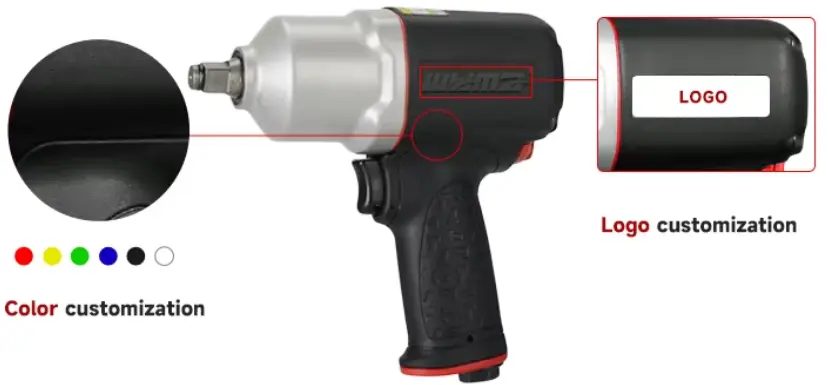
You can click "Send Inquiry" on the top of the product introduction page of our website to jump to the inquiry content form to send us an inquiry. Our staff will reply to you as soon as possible to communicate the details and tell you how to place an order. Alternatively, you can contact us through the following contact information.
For 24 hours contact details as below:
Email:
sales01@wymatools.com / sales03@wymatools.com
Tel / WhatsApp / Wechat:
+86-133 6036 8438 / +86-136 2252 8472
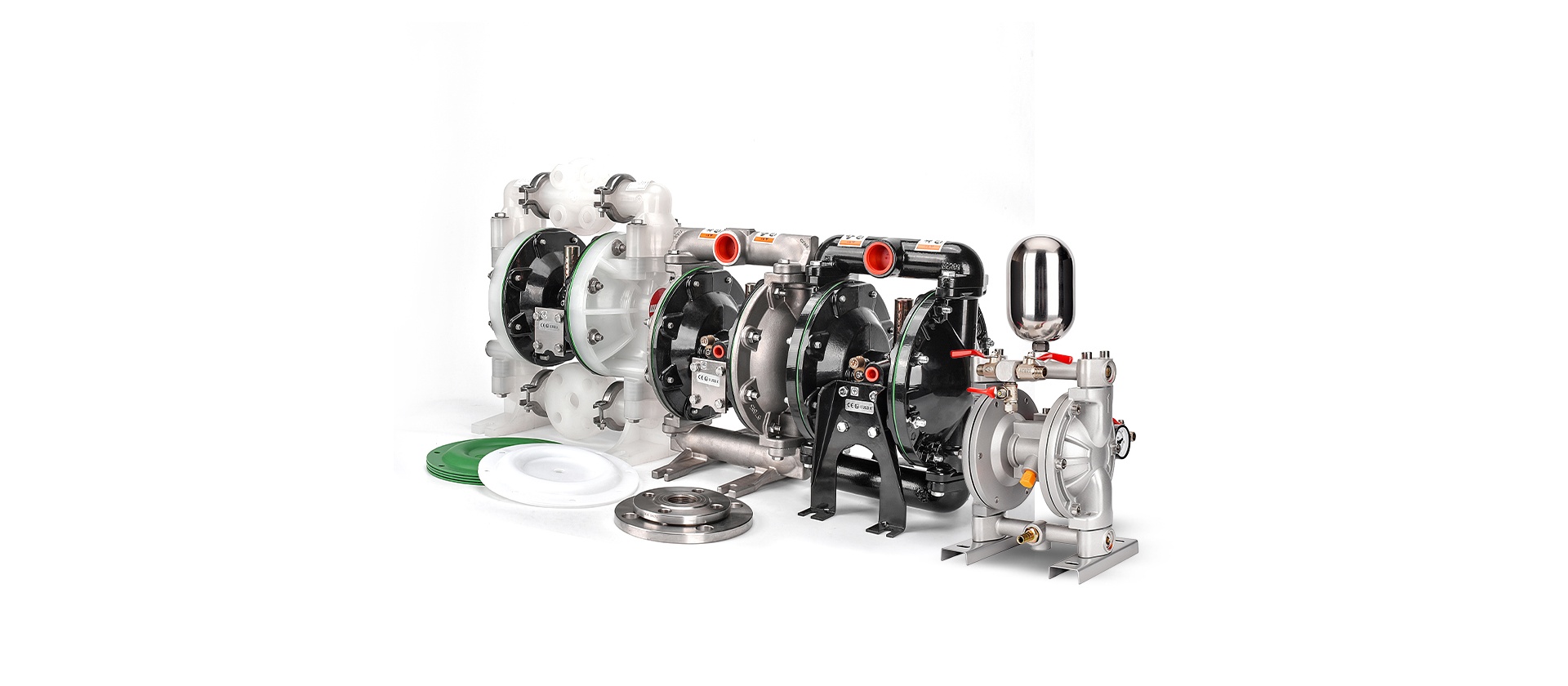
WYMA® is wholesale AODD pumps, which are positive displacement pumps powered by compressed air and are mainly used to pump fluids of various properties. What makes our pump work is the way compressed air drives two flexible diaphragms back and forth in alternating motion. This action creates suction and discharge pressure, so fluid moves steadily without interruption. Here’s how it operates: compressed air enters one of the pump’s air chambers, which pushes the diaphragm outward. At the same time, the other diaphragm pulls back through a shared connecting shaft. That movement creates a negative pressure(vacuum) on the liquid side, drawing fluid in through the inlet. Once the diaphragm reaches the end of its stroke, the air valve automatically shifts. That redirects air to the opposite chamber, forcing the second diaphragm to push fluid out through the discharge port. Meanwhile, the first diaphragm retracts, which begins the suction cycle again. This back-and-forth rhythm between both diaphragms allows it to deliver a smooth and highly consistent flow.

We use common materials like aluminum alloy, stainless steel, engineering plastic and PVDF in our pumps because each one behaves differently with the fluids being moved.
How we match a material to an application depends entirely on its chemical compatibility with the medium. For example, aluminum alloy resists corrosion well with neutral fluids—such as water and oils—but does not hold up well against acids, alkalis, or other aggressive chemicals. That’s why we often apply it to handle glaze, paint, oils, and solvents. Stainless steel offers broader corrosion resistance, which makes it a reliable choice for general chemicals, alcohols, liquid pharmaceuticals, and beverages. When it comes to pumping acids, alkalis, salts, and many organic solvents, engineering plastic stands up to most common corrosive fluids. For even more demanding applications involving highly aggressive media, in these cases, PVDF becomes the material we choose over standard plastics. Our pumps are available in different port sizes, which refer to the diameter of the inlet and outlet. These are always equal except for some PVDF models. You’ll find our aluminum alloy pumps in six sizes: 1/2″, 3/4″, 1″, 1-1/2″, 2″, and 3″. Stainless steel comes in four: 1″, 1-1/2″, 2″, and 3″. Engineering plastic pumps are offered in seven: 1/4’’, 3/8’’, 1/2’’, 3/4’’, 1’’, 1-1/2’’, 2’’. PVDF pumps come in five configurations where inlet and outlet sizes are differ—for example, 3/8''&1/2'', 3/8''&1'', 1-1/4''&1-1/2", 2''&2-1/2", 3''&4".

Yes! In addition to the aforementioned material-based options, we also offer aluminum alloy multi-function pumps. The versatility, which lies in their ability to connect to the air spray gun for paint spraying, can also accommodate double-in, single-out or double-in, double-out configurations. Customers can choose according to their specific needs. We currently offer two sizes of multi-function pumps: 3/8" and 1/2".

Excellent sealing and leak-free operation: The pump has no mechanical seal components inside, effectively preventing fluid leakage. It is particularly suitable for conveying toxic, hazardous, corrosive, or expensive fluids.
Dry-priming capability: The pump can be operated without fluid (i.e., dry-running) without damage, making it an essential safety feature for some special operating conditions.
Adjustable flow & air pressure: This pump's flow rate and lift can be easily controlled by adjusting the air inlet and flow regulator, providing high flexibility.
Applicable media: This pump can handle fluids of various viscosities, including low-viscosity aqueous fluids, high-viscosity slurries, and fluids containing solid particles.
Simple structure and easy maintenance: The pump has relatively few parts, making disassembly, assembly, and maintenance relatively simple.
For Air Paint Spray Diagram Pump, there are generally three main performance parameters: Flow Rate, Suction Height & Particle Diameter. A pump’s Flow Rate measures the sheer volume of fluid it moves within a set timeframe, which technicians usually expresse in LPM, GPM, or m³/h. This figure reveals the machine's fluid delivery strength and dictates the total workload the pump can finish within a certain time limit. When you opt a pump for a specific project, the peak flow rate should be ensured according to our actual needs. And what about Suction Height? It indicates the max vertical distance a pump can draw fluid from below the liquid level, usually in meters(m) or feet(ft). This value directly represents the pump's suction capacity, determining whether the pump has sufficient vacuum strength to empty the bottom of deep tanks or draw material from distant storage tanks. Finally, the Particle Diameter represent the solid diameter that can travel through the internal chambers without causing a clog. Because diaphragm designs vary across different models, this number tells you exactly which slurries, muds, or impure liquids the pump can survive. If your process involves heavy particulates, checking this spec ensures the pump handles the grit rather than seizing up mid-operation.
All of our Pneumatic Diaphragm Pumps are certified by the EU Mechanical MD-CE standard, ensuring safety, reliability, and durability. Customers can purchase with confidence.
Yes, we stock all the models shown on our website. Please feel free to contact our professional team for details on quantity requirements and other details.
No problem, we offer custom colors and logos. Please feel free to discuss customization details with our professional team.
You can click "Send Inquiry" on the top of the product introduction page of our website to jump to the inquiry content form to send us an inquiry. Our staff will reply to you as soon as possible to communicate the details and tell you how to place an order. Alternatively, you can contact us through the following contact information.
For 24 hours contact details as below:
Email:
sales01@wymatools.com / sales03@wymatools.com
Tel / WhatsApp / Wechat:
+86-133 6036 8438 / +86-136 2252 8472
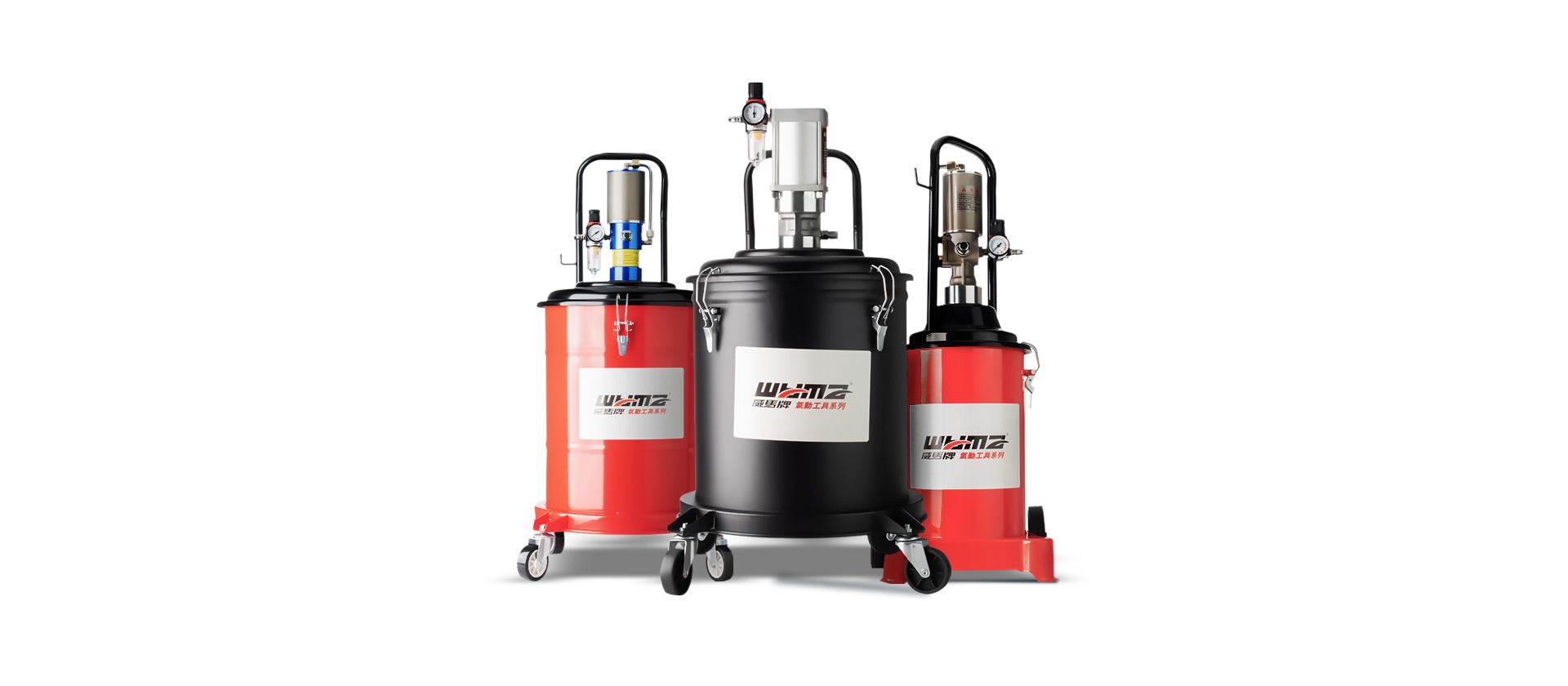
Purchase pneumatic grease pumps in bulk from WYMA® now. It is a device that uses compressed air as power to achieve high-pressure grease injection through the principle of pressure amplification. The core of this device is a connecting rod that joins the air piston to the grease piston. As compressed air enters, it pushes down on the large-area air piston. That motion transfers directly through the rod to the smaller grease piston below. Because the grease piston has a much smaller surface area than the air piston, the force applied creates intensely magnified pressure—dozens or even hundreds of times higher than the input pressure. This is Pascal’s principle in action. It use that force to push lubricant out from the pump body, delivering it steadily through a high-pressure hose and grease gun nozzle directly to the point of lubrication. Inside the system, a directional control valve continuously reverses the airflow, which allows the air piston to move up and down repeatedly. That reciprocating motion is what gives you a consistent and reliable flow of grease.
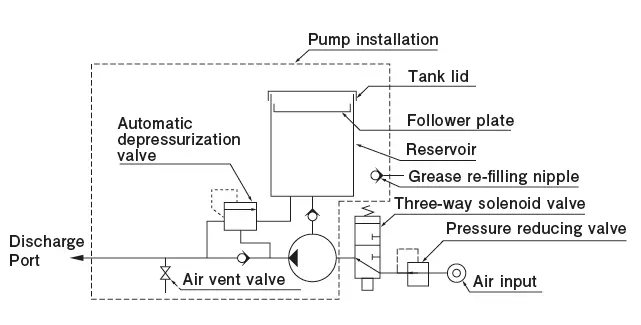
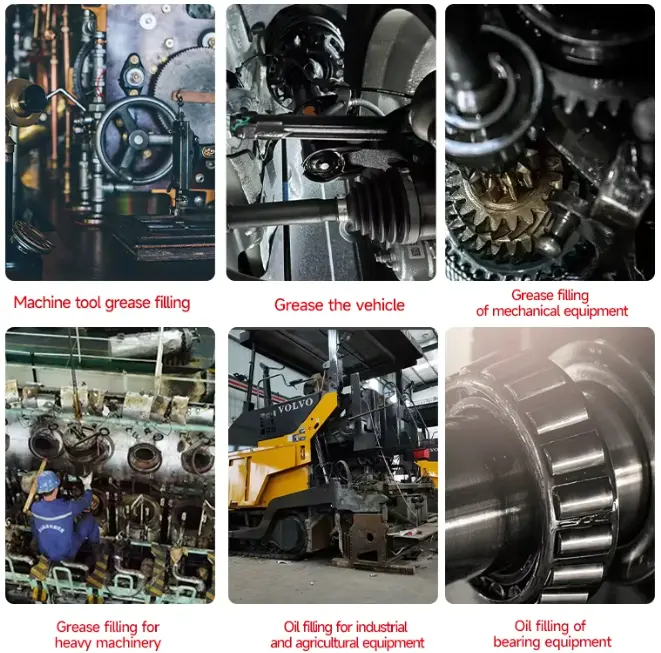
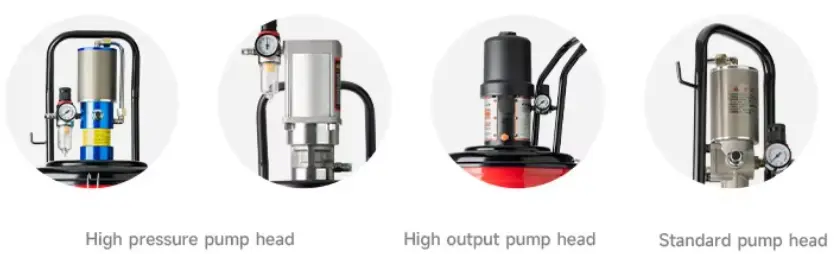
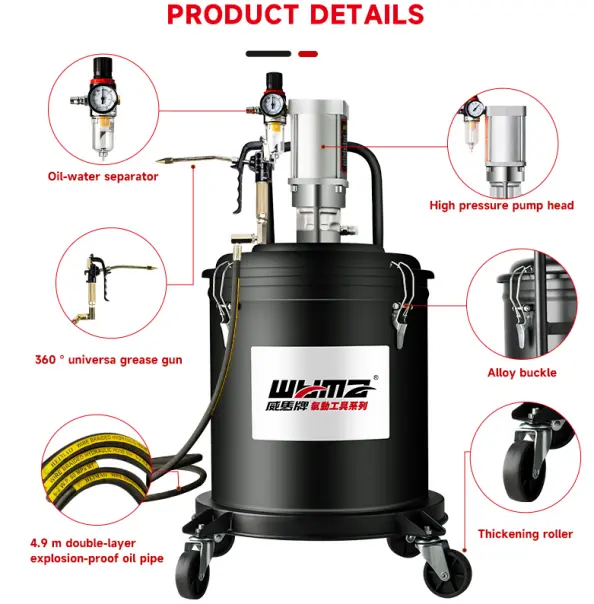
We offer our products in 12L/3gal, 20L/5gal and 40L/12gal capacities, with your choice of two output pressure ranges: 30–40 MPa or 40–50 MPa. In addition to conventional pour-in models, we also provide a bucket-in version that lets you place a full grease bucket directly into the unit—which makes it very convenient for continuous use. Our pump head series includes high-flow model and enhanced model that work with #0–#3 viscous grease, even in cold conditions, and can also handle high-temperature grease up to 300°C, this variety helps us match many different lubrication needs. The barrel is built with a 13 mm thickened corrosion-resistant alloy that we can rely on for long-term durability. The grease gun delivers smooth, fast flow and can rotate 360 degrees for flexible operation. Equipped with universal casters, our pumps are easy to move around. Our products are now widely used in the lubrication of mechanical equipment, ships, vehicles, industrial and agricultural equipment and bearing equipment.
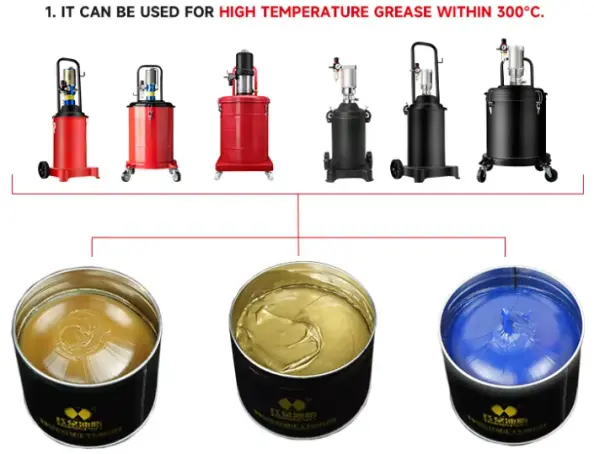
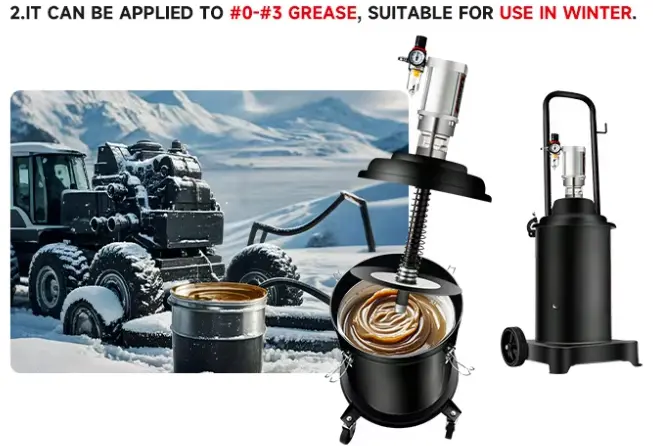
Different grease pump heads typically have different capacities or specifications. Large-capacity models are typically used in applications requiring high lubrication volumes, such as construction machinery and shipbuilding and port equipment, while small-capacity models are typically used in agricultural machinery, auto repair shops, and small workshops. We know that the pneumatic pump head is the most important component of an air grease pump. We offer a wide variety of grease pump heads. High-capacity pneumatic pump heads are often used in applications requiring high lubrication volumes and are typically paired with large-capacity grease barrels. We also offer pneumatic pump heads capable of pumping 300°C high-temperature grease and thicker greases #0-#3, making them ideal for winter lubrication and other extreme working conditions. Want to learn more? Contact our professional service team.
The pneumatic grease pump has the following core performance parameters: Pressure Ratio, Grease Output, and Applicable Viscosity.
The Pressure Ratio reflects how effectively the pump converts air supply pressure into higher output pressure, a higher ratio directly improves usability in demanding conditions—meaning you can achieve strong performance even with lower input pressure.
Grease Output, which we measure in g/min or ml/min, tells you how much grease the machine can deliver per minute. If you're working on large applications or want to finish lubrication tasks faster, this is a key spec you’ll want to pay close attention to.
Then there’s Applicable Viscosity, it usually expressed in NLGI grades. Our pumps are designed to handle a wide range of grease consistencies, all the way from NLGI #000 up to #3. We generally believe that a good quality grease pump is compatible with greases of various viscosities to suit different application scenarios.
You might be wondering—how should you actually choose a grease pump that fits your needs? It starts with the grease: #2 is the general standard for routine maintenance, #3 is suitable for high-pressure, high-temperature, heavy-duty equipment, and #1 and #0 are suitable for low temperatures or systems requiring high fluidity. In cold weather, it's recommended to choose the grease with a lower viscosity to prevent pumping difficulties. From there, think about the pump head. Which kind fits your situation—do you need high flow & high pressure, better performance with thick grease in the cold, or a balance of flow and temperature? Once you know what type of pump head will you use, what grease you’re using, and about how much the approximate amount of grease you’ll use, the right grease pump becomes much easier to identify.
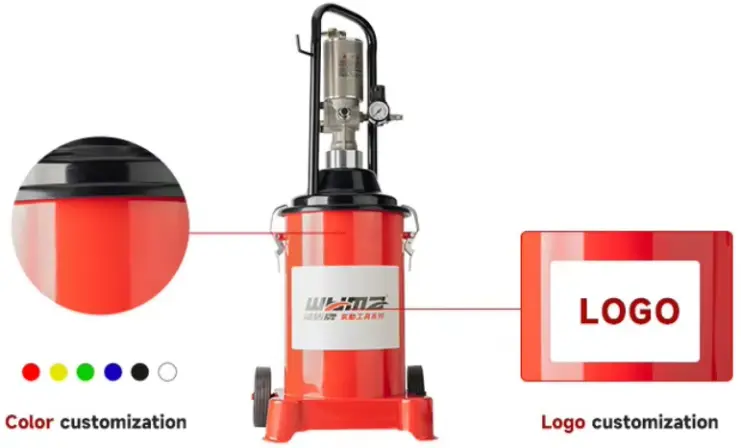
All our air grease pumps comply with the EU’s Machinery MD-CE certification, which we believe is essential for delivering safety, reliability, and long-term durability. Every model you see on our website is currently in stock—we work to maintain strong availability so you can order with confidence. We also provide custom color and logo options. If you’re interested, just reach out to our pro team. We’ll be glad to help with volume needs or any other customization details you have in mind.
You can click "Send Inquiry" on the top of the product introduction page of our website to jump to the inquiry content form to send us an inquiry. Our staff will reply to you as soon as possible to communicate the details and tell you how to place an order. Alternatively, you can contact us through the following contact information.
For 24 hours contact details as below:
Email:
sales01@wymatools.com / sales03@wymatools.com
Tel / WhatsApp / Wechat:
+86-133 6036 8438 / +86-136 2252 8472
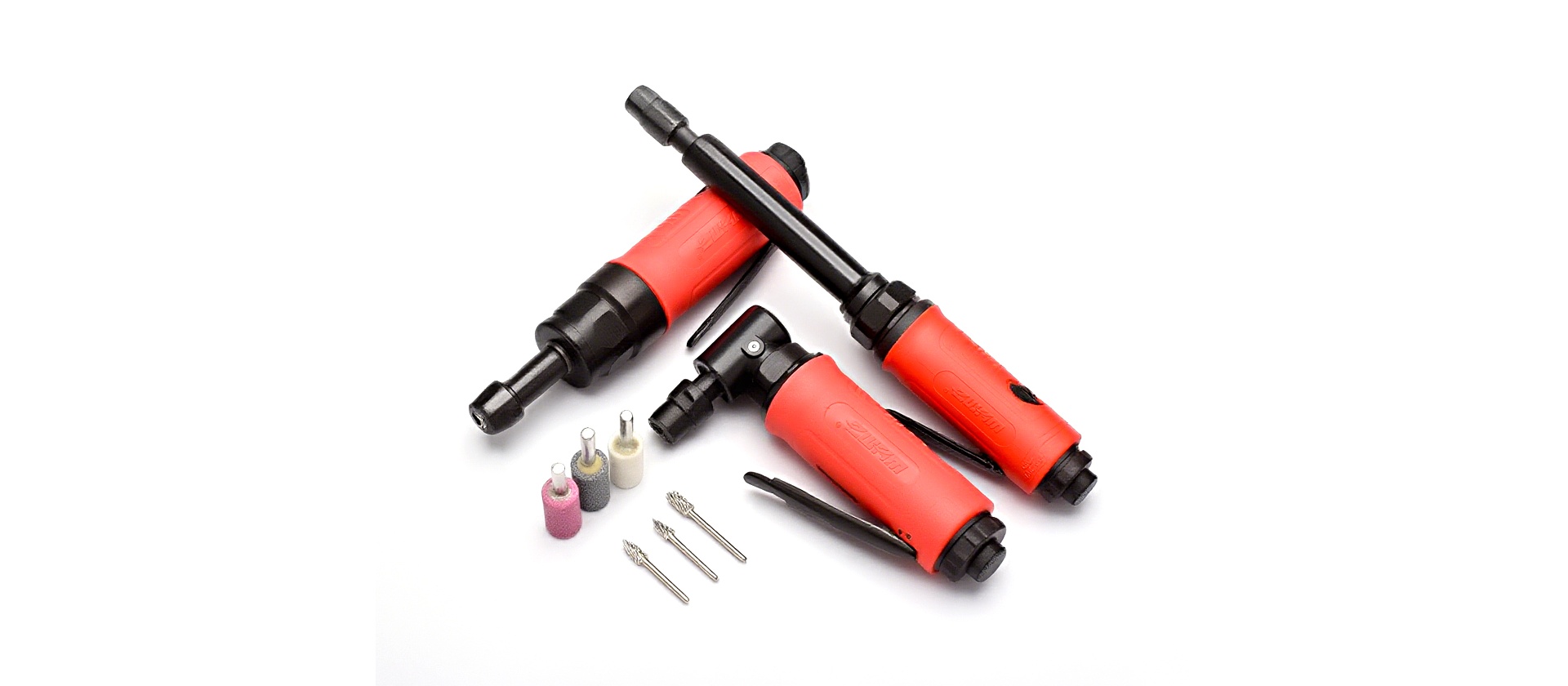
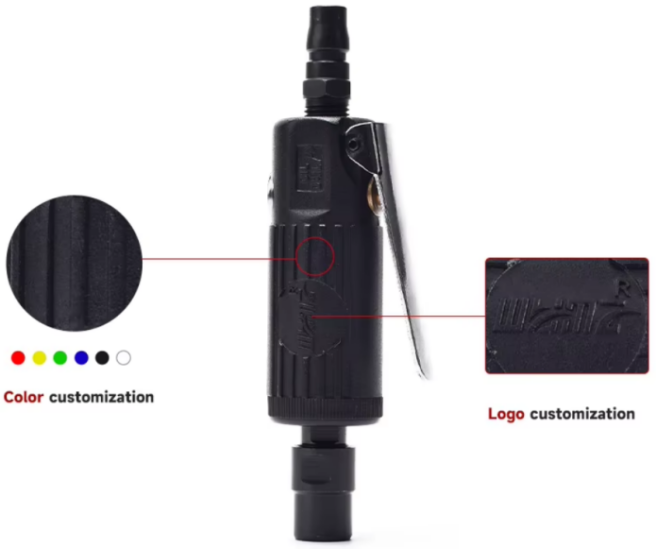
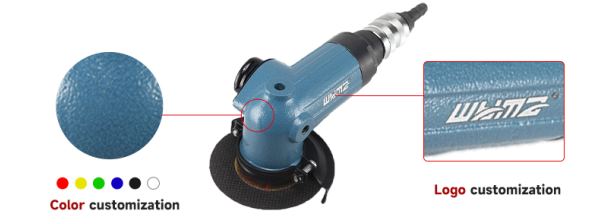
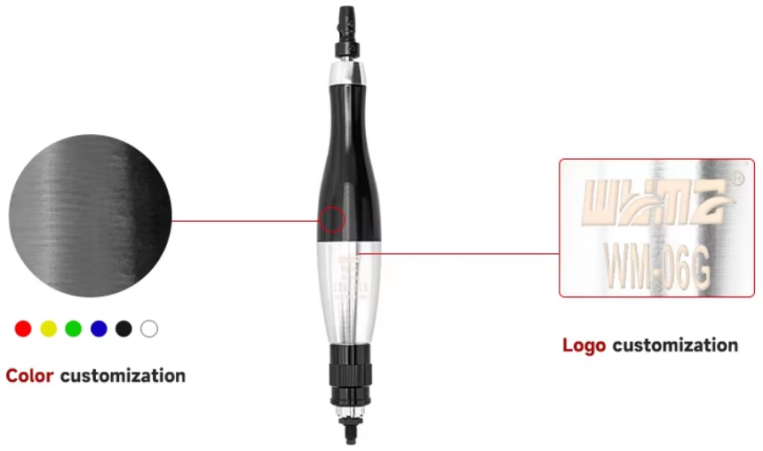
We supply WYMA® Pneumatic Grinders in bulk, designed and manufactured in China, including five main series: the Die Grinder, Angle Grinder, Pencil Grinder, Ultrasonic Grinder and Chamfering Machine. Each series delivers smooth high-speed operation with near-zero vibration, which makes them reliable even under demanding cutting conditions. They maintain a runout tolerance between 0.01mm and 0.03mm, a level of precision that stems from core components made of alloy steel, high-density fiber and ductile iron—materials that undergo mature CNC heat treatment.
The Die Grinder series is further divided into High/Low Speed Models, Extended Model and Right-Angle Model, each accepting collets in 3mm or 6mm sizes. The High Speed Model suits for some common tasks such as quick deburring, general engraving and sanding wood. The Low Speed Model, which delivers larger torque at the lower RPMs, handles primary processing of heavy machinery parts and intensive grinding of hard materials. Thanks to its extended body, the Extended Model reaches into deep, narrow spaces like pipe interiors and grooves. The Right-Angle Model, fits into tight spots where access is limited—places like mold cavities and tight corners with its L-shaped design.
Angle Grinders come in sizes from 4 to 7 inches and compatible with both cutting discs and grinding discs, which gives them a dual purpose. You can use them for grinding and cutting metal or wood, and also for slicing tiles.
The Pencil Grinder series gives you a lot options: 90° or 120° Angle Style, 90° or 120° Grinding Disc style and Straight style. Besides common jobs like rust removal and weld seam cleaning, this serie's tools excel in cramped spaces where precision matters—applications that include micro-hole grinding and finishing in aerospace or precision instrument manufacturing. Artists and woodworkers also use them for delicate work such as jade carving, tile polishing, and shaping plastic.
Ultrasonic Grinders get their name from their reciprocating motion, which matches ultrasonic frequencies. You can choose between two operating modes: Back & Front Reciprocating or Left & Right Swing. They’re often the tool of choice for die polishing and stone polishing.
The Chamfering Machine series offers a choice between C-Type and R-Type tungsten steel blades—so be sure you know which material each blade type suits. It also allows precise adjustment of chamfer depth from 0.1mm to 0.9mm, making it a practical option for putting C-angle or R-angle chamfers on contours, grooves, and edges of various hard materials.
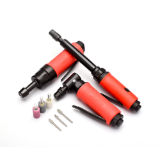
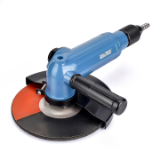
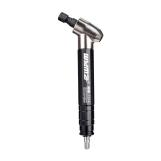
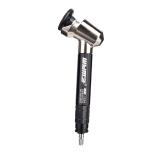
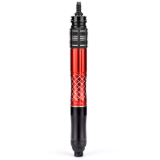
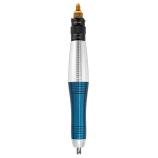
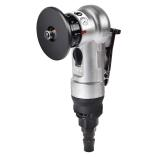
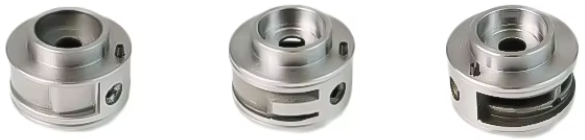
While the Angle Grinder and Chamfering Machine series may differ slightly and not suit certain specific needs, the other series are of course fully compatible! As you can see in the image below, we offer two sizes of chucks, a variety of interchangeable grinding heads, blades, cutting discs, and sanding discs, ensuring they're compatible with your specific product. Let WYMA help you achieve true multi-purpose use with one machine.
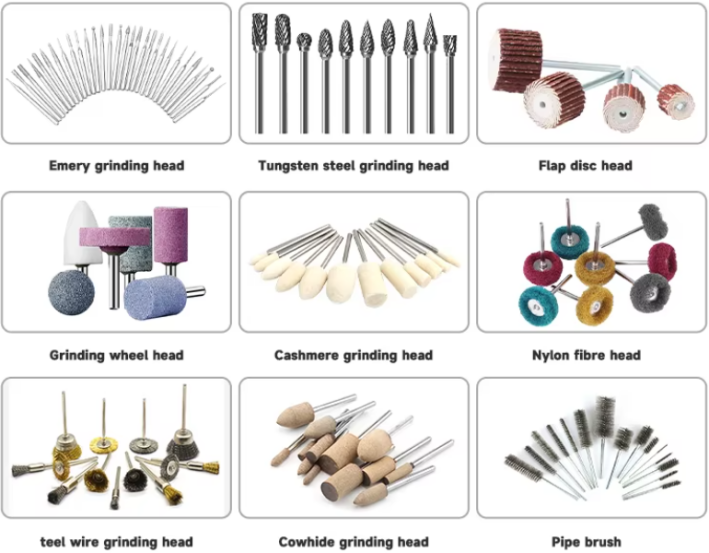
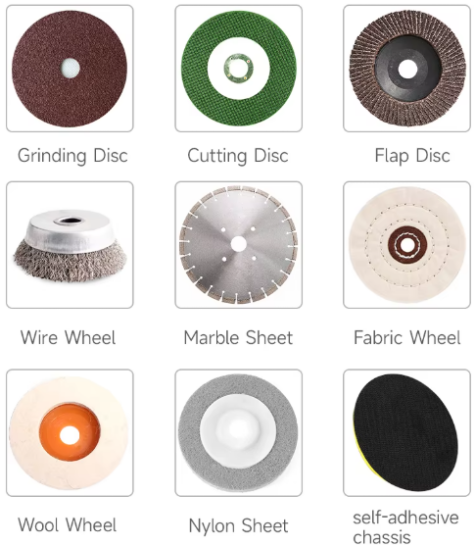
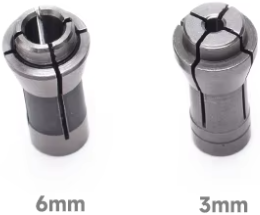
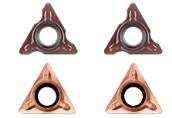
Different series have their own key parameters, which is why we need to introduce each group separately.
For Die Grinders, Angle Grinders and Pencil Grinders, the main parameters are Free Speed and Collet Size. Free Speed refers to how fast the tool spins when it’s running with no load—we measure it in RPM. This speed determines both the rate at which material is removed and the level of aggression in the cut. What happens is that a higher free speed generally means you can work faster, though it may reduce cutting force; a lower speed slows the process but increases the force that the tool applies. Collet Size tells you what maximum shank diameter the grinder can grip. A larger collet size is what you need if you plan to use bigger grinding heads.
When we look at the Ultrasonic Grinder series, the key specification shifts to Reciprocating Stroke. This is the tiny linear distance—measured in mm—that the tip travels from one end of its movement to the other. A shorter stroke is what gives you a finer surface finish, which is why it works well for delicate polishing, creating mirror-like surfaces, removing very fine lines or microscopic burrs. On the other hand, a longer stroke means the tool takes off more material each cycle, which is how it handles jobs like rough deburring or pre-machining larger grooves in molds.
For Chamfering Machine, the main parameters are Chamfer Aperture, Adjustable Depth and Chamfering Capacity. Chamfer Aperture indicates the smallest hole or inner edge dia.—on items like tubes or round bars—where the machine’s blade can still operate. For example, a machine has a min Chamfer Aperture of 7mm, any opening smaller than that is where this chamfering machine simply won’t suit. Adjustable Depth is the range through which you can change how far the blade extends. Adjusting this is how you control the depth of the cut into the workpiece edge, which directly sets the width of the resulting 45° chamfer(Size of the two right-angled sides with a 45°chamfer). Chamfering Capacity indicates the largest chamfer size the tool can produce, usually described as a C-angle width (like C0 to C2) or an R-radius. This capacity defines the chamfering machine’s working range, and it’s the number that matters most when you’re choosing which model to use.
In this case, the grinding head used may be of poor quality. We can choose to replace it with a grinding head with better quality, or we can use a grinding tool to trim the defective grinding head evenly and coaxially before using it.
Yes, all models shown on our website are in stock, and we support color and logo customization. Please feel free to discuss the required quantity and specific customization details with our professional service team.
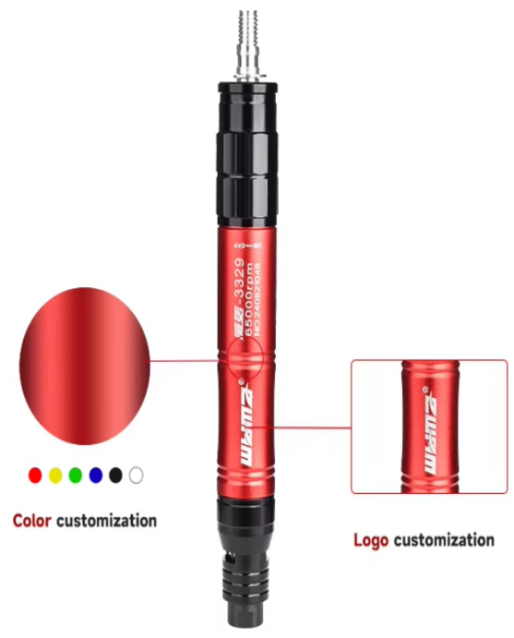
At Foshan WYMA, we help clients with precision pneumatic tools. Founded in 1997, we have nearly three decades of manufacturing expertise. Our 23,000 sqm facility is equipped with advanced CNC systems, which we use to build custom and OEM/ODM tools. These products meet rigorous standards—like the EU MD-CE certification that all our air grinders hold—so you know they are safe and durable. We support what we sell with after-sales coverage in more than 30 countries.
You can click "Send Inquiry" on the top of the product introduction page of our website to jump to the inquiry content form to send us an inquiry. Our staff will reply to you as soon as possible to communicate the details and tell you how to place an order. Alternatively, you can contact us through the following contact information.
For 24 hours contact details as below:
Email:
sales01@wymatools.com / sales03@wymatools.com
Tel / WhatsApp / Wechat:
+86-133 6036 8438 / +86-136 2252 8472
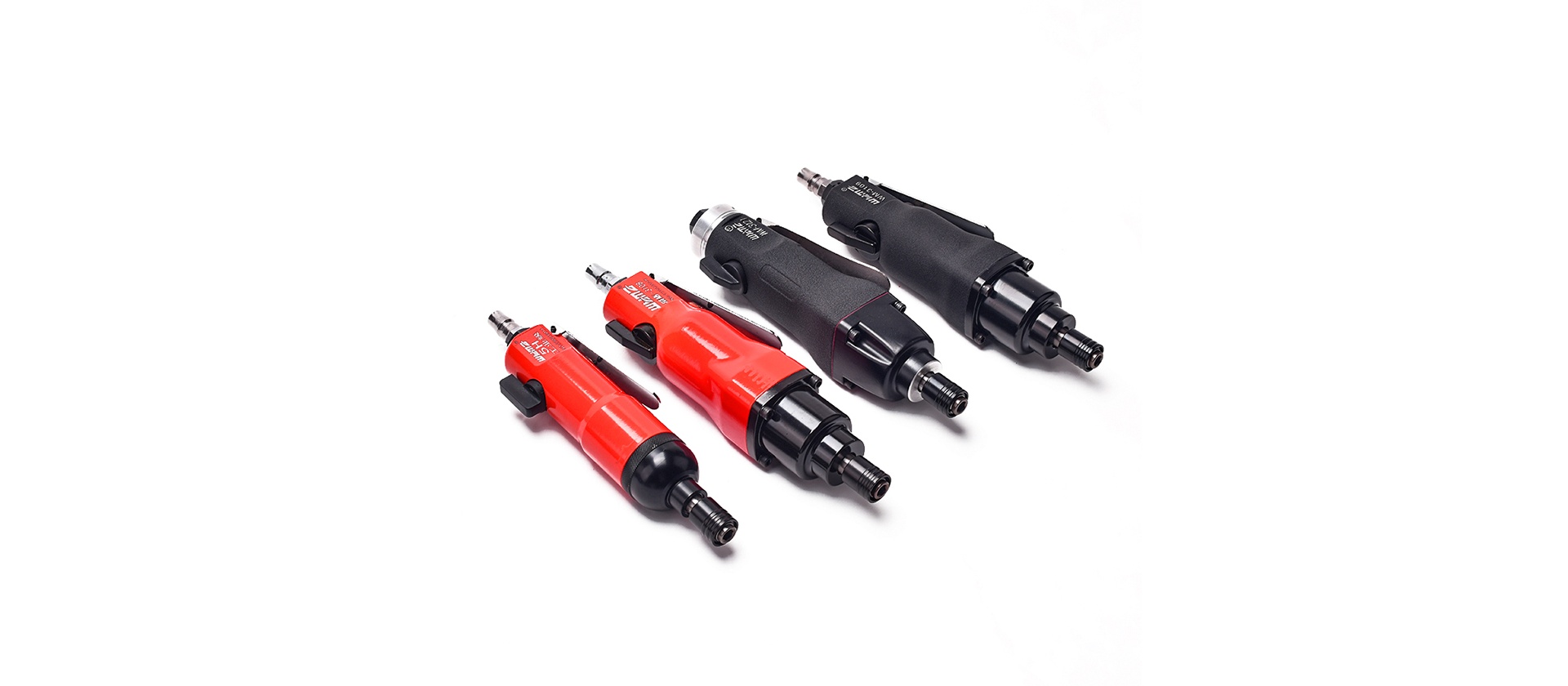
WYMA® makes four main series of Wholesale Air Screwdrivers, which are the Straight Type series, the Pistol-grip series, the Right Angle series and the Inline Torque series.
What distinguishes the Straight Type from the Pistol-grip is essentially how you hold them, a choice that boils down to personal preference. Their torque, which spans from 60N.m to 155N.m, suits general factory work, furniture assembly, or automotive and machinery maintenance where you need to drive screws.
The Right Angle series has a 90° elbow body that lets you work in tight corners and confined spaces that other tools cannot reach.
As for the Inline Torque series, it lets you preset multi specific torque levels, a feature that makes it suitable for delicate electronics and high-precision instruments whose assemblies require a controlled torque range from 0.5N.m to 2N.m.
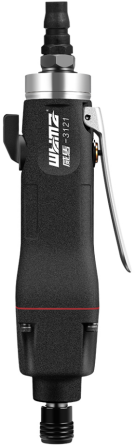
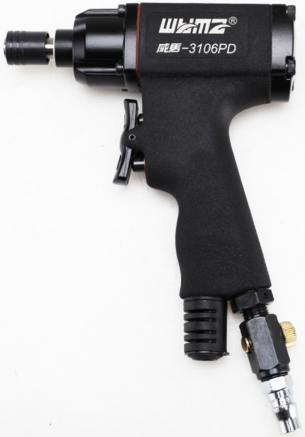
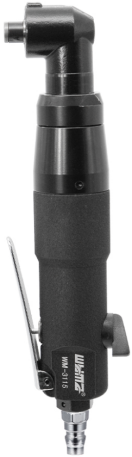

This situation is usually caused by the screwdriver's torque being too large, and the screwdriver has not stopped when the screw reaches the max tightening position. That’s why we suggest using the WM-3112 model or WM-3113 model Air Inline Torque Screwdriver, which is built for high-precision assembly work like fastening screws in electronics and delicate instruments. You can set a specific torque level on this tool, and it starts as soon as you press it down on the work pieces. Once the torque reaches the preset limit, it stops immediately—so it won't damage the screw or the device. This screwdriver has four torque settings: use setting Gear 2 for screws that are 1.5mm in diameter, setting Gear 4 for those that measure 2–3mm, setting Gear 6 for 3–4mm screws, and setting Gear 8 when you’re working with 4–5mm screws.
Of course! We offer the parts shown in the pictures below. We also offer a variety of screwdriver bits, including slotted bits, phillips bits, hex bits or sleeves and torx bits. These all perfectly match our products, allowing you to easily handle screws with a variety of head shapes.
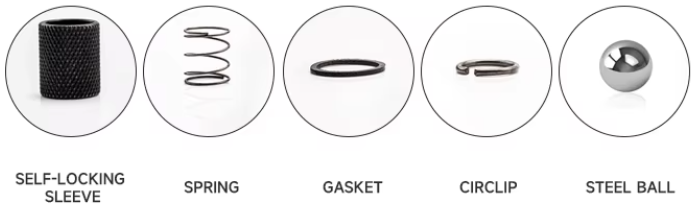
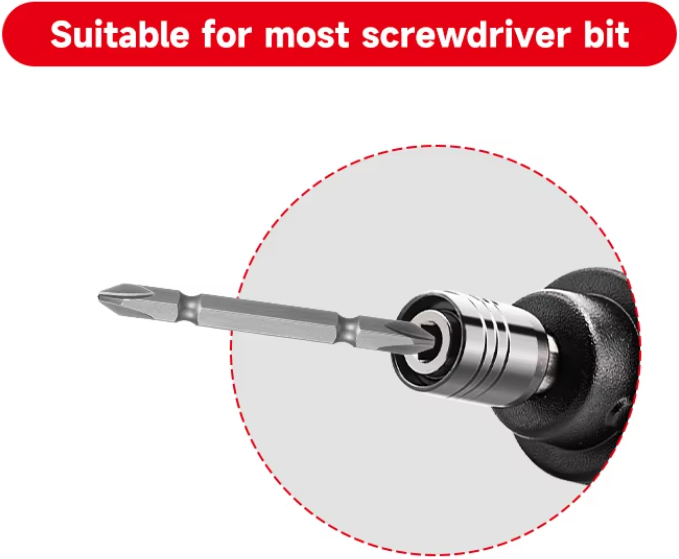
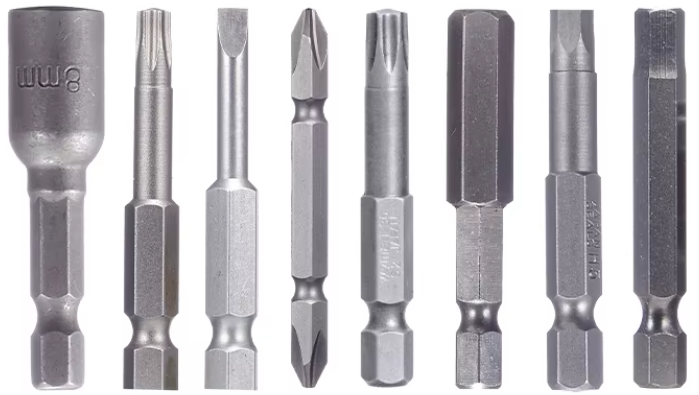
There are only two main specifications: Max Torque and Bolt Capacity.
Max Torque is the most important parameter of a pneumatic screwdriver. It represents the upper limit of the output rotational torque and directly determines how tight the screw can be tightened. People usually measure it in N·m. This parameter gives you a clear understanding of the tool's fastening capacity and what kind of work pieces it can handle. For instance, putting together delicate electronics requires low, precise torque, while assembling heavy machinery needs a much higher torque. When you look at a product catalog and see a torque range, just make sure the torque you need for your work falls within that range.
Bolt Capacity tells you the range of screw diameters the tool is meant to work with, and it's given in mm. It is a very intuitive selection indicator to choose the right tool, because it shows exactly what size screws the driver can take. If a air screwdriver indicates it's for M4 to M5 screws, that means it’s the right choice for screws that have a head diameter between 4mm and 5mm.
Our screwdrivers have extremely powerful output and can be used for screw tapping common construction materials. The applicable materials are shown in the following pictures.
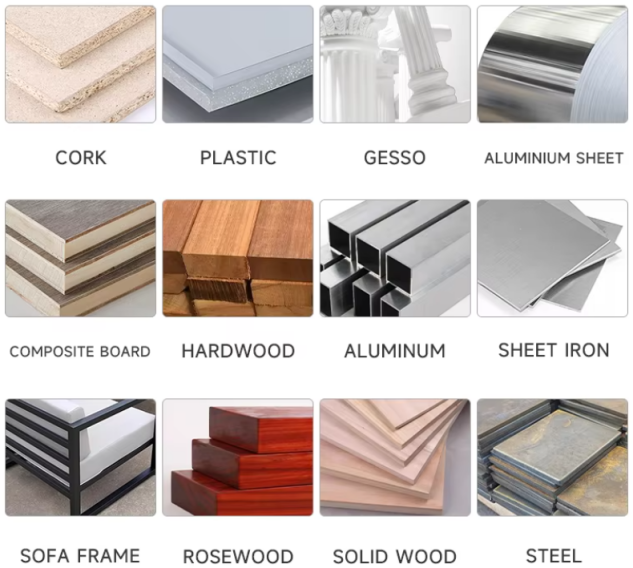
All of our Pneumatic Screw Drivers are EU MD-CE certified, safe, reliable and durable. Customers can rest assured to purchase them. The models displayed on our website are in stock. We also support color and logo customization. Please feel free to consult our professional team for the specific quantity and other customization details you need.
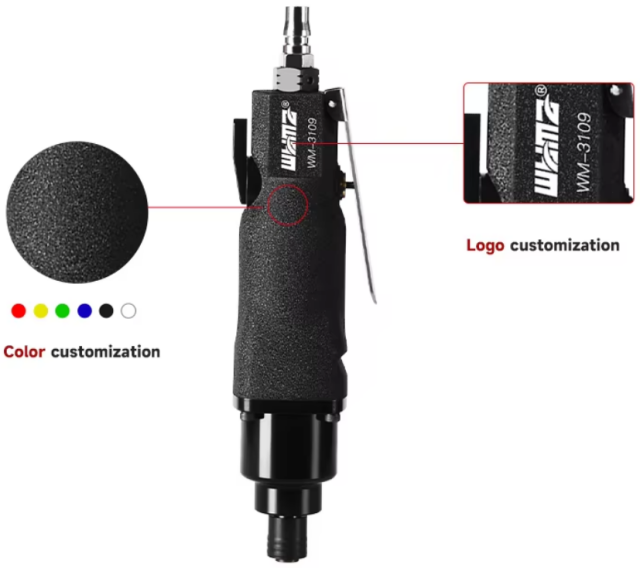
You can click "Send Inquiry" on the top of the product introduction page of our website to jump to the inquiry content form to send us an inquiry. Our staff will reply to you as soon as possible to communicate the details and tell you how to place an order. Alternatively, you can contact us through the following contact information.
For 24 hours contact details as below:
Email:
sales01@wymatools.com / sales03@wymatools.com
Tel / WhatsApp / Wechat:
+86-133 6036 8438 / +86-136 2252 8472

WYMA® premium air spray paint guns are in stock and available in bulk. Order now at the factory low price. Our spray guns are divided into three series: conventional series, low-pressure spray series and automatic spray series. Among them, the conventional series includes two styles: gravity-fed spray guns and siphon-fed spray guns. The maximum spray height can reach 400mm, the maximum spray width can reach 300mm, and it can support the replacement of nickel-chromium cups with capacities of 400ml, 600ml, and 1000ml. It is often used for small-scale spraying and routine operations and is the first choice for general individual users. Next is the low-pressure spray series, which includes two styles: HVLP and LVLP. They both use low-pressure air high atomization technology to achieve a higher paint transfer rate. They only need to operate at an operating air pressure of 2.0~3.0Bar. The paint usage is saved by up to 30% compared to other spray guns. The spraying is more delicate and uniform, eliminating the problem of excessive atomization of general spray guns. It is often used in professional spraying scenarios. The HVLP model requires a high-displacement air compressor, while the LVLP model consumes very little air. Designed to address the high air compressor requirements of HVLP, it can be powered by virtually any standard air compressor, making it ideal for professional individuals or small studios. Why have automotive, appliance, and furniture plants moved away from manual spraying tools toward automatic spray series? It comes down to the relentless demands of the modern assembly line. These automatic spray guns are capable of continuous high-speed spraying and feature adjustable and lockable dual precision knobs. This setup fixes the paint volume, spraying distance and angle highly consistent each time, which means the thousandth product looks exactly like the first one, no matter how fast the line moves. Because industrial floors are unforgiving, we build these units from anodized aluminum and chrome-plated brass. These materials make the equipment more durable and able to withstand high-volume, high-precision, and highly consistent spraying operations.


The secret lies in its low-pressure air atomization technology, which ensures that the airflow pressure in its nozzles remains below 10 PSI, a sharp departure from what traditional high-pressure guns deliver. And its lower speed ensures that paint particles settle onto the surface with a soft touch, so you won't find the messy rebound or splashing that occurs when paint hits a surface too hard. By keeping the paint where it belongs, this method cuts material waste and keeps the workspace cleaner, which naturally reduces both pollution and the time spent scrubbing down the booth.
Sure! Generally speaking, the three consumable parts of a pneumatic paint spray gun that wear out the fastest are the needle, cap, and nozzle. We offer the sale of these three parts individually, so you only need to replace these consumable parts to extend the life of your spray gun, allowing you to use it with confidence. When purchasing, please be sure to determine the desired spray pattern, whether linear or circular. Then, choose a cap with a different shape and hole design (Fan Pattern or Round Pattern). Also, select the nozzle size that suits your paint type (see the image below).


The main performance parameters are Nozzle Size, Working Pressure, and Air Consumption. Nozzle Size determines the amount of paint sprayed by the spray gun and the atomization effect, and it is usually measured in mm. Generally speaking, a small nozzle (0.8-1.3mm) will correspond to smaller paint particles, such as Varnish and water-based paint, and a large nozzle (1.4-3.0mm) will correspond to larger paint particles, such as thick paint and artistic paint. Working Pressure refers to the compressed air pressure required for the spray gun to work normally. It is usually an important parameter that defines general spray guns and low-pressure spray guns. The Working Pressure of a general spray gun is between 4-8 Bar, so customers who want to buy an HVLP spray gun or LVLP spray gun need to pay special attention to this parameter, and their Working Pressure is usually between 2-3 Bar. Air Consumption refers to the amount of compressed air consumed by the spray gun per unit time, usually measured in CFM or LPM. This spec determines what type of air compressor will actually support your work. If the gun draws more air than what the compressor supplies, the pressure will fluctuate, which is exactly how a poor, uneven finish occurs.
Yes, we have all the models shown on our website in stock. We also offer custom colors and logos. If you're interested in our products, please contact our professional team to discuss quantity requirements and other custom details.


You can click "Send Inquiry" on the top of the product introduction page of our website to jump to the inquiry content form to send us an inquiry. Our staff will reply to you as soon as possible to communicate the details and tell you how to place an order. Alternatively, you can contact us through the following contact information.
For 24 hours contact details as below:
Email:
sales01@wymatools.com / sales03@wymatools.com
Tel / WhatsApp / Wechat:
+86-133 6036 8438 / +86-136 2252 8472
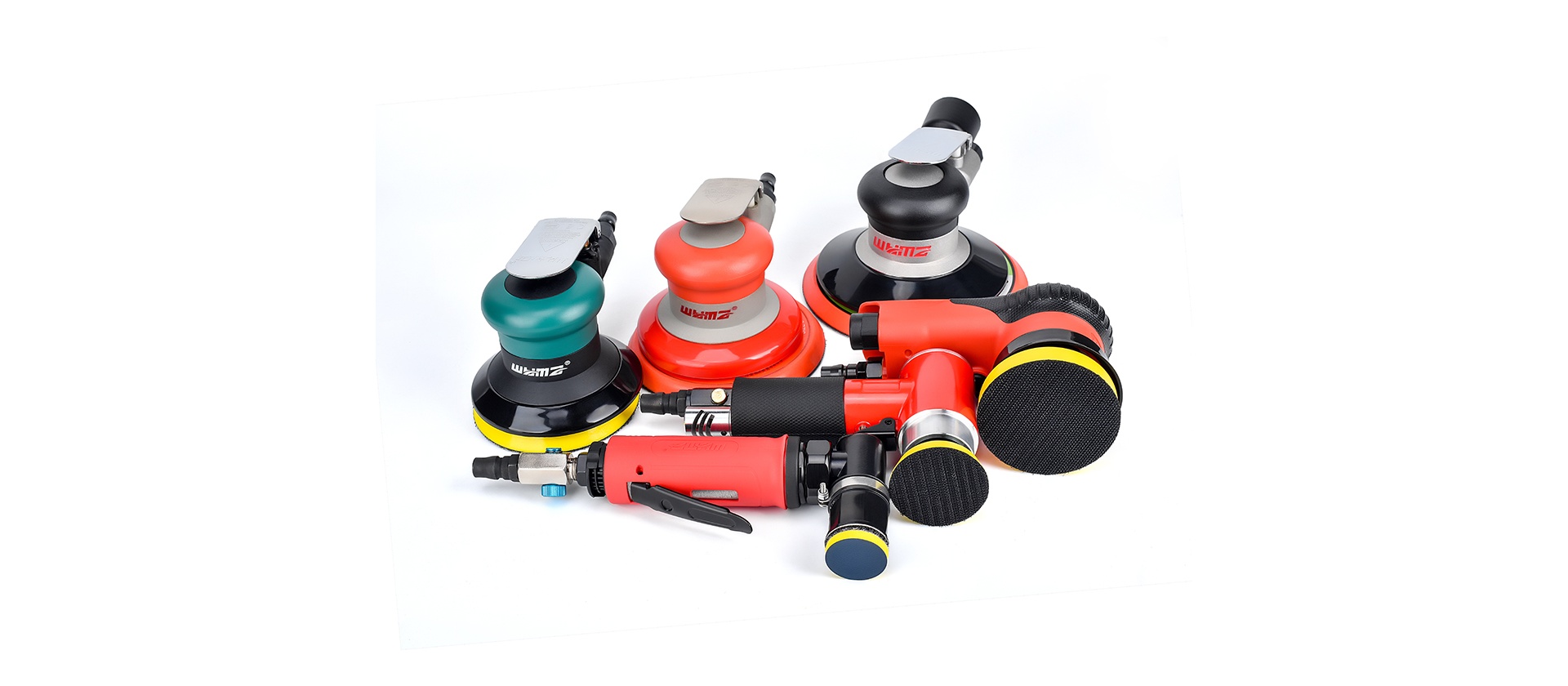
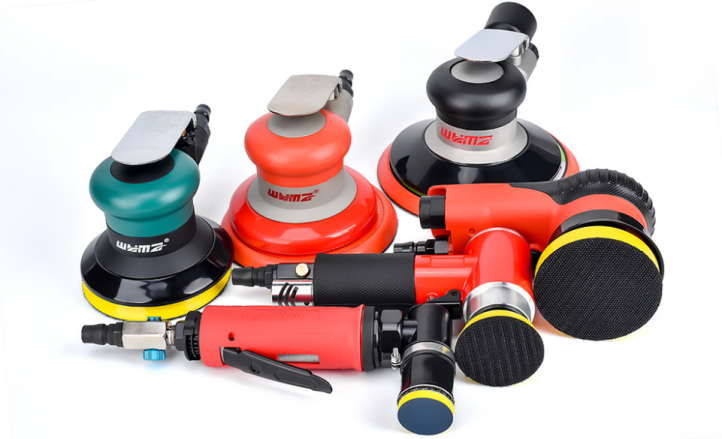
WYMA® customized Air Sanders are in stock that fall into four main series: the Orbital Sander series, the Belt Sander series, the Triangle & Rectangle Sander series and the Mini Polishing Sander series. Their sizes cover a range from 1 inch up to 6 inches.
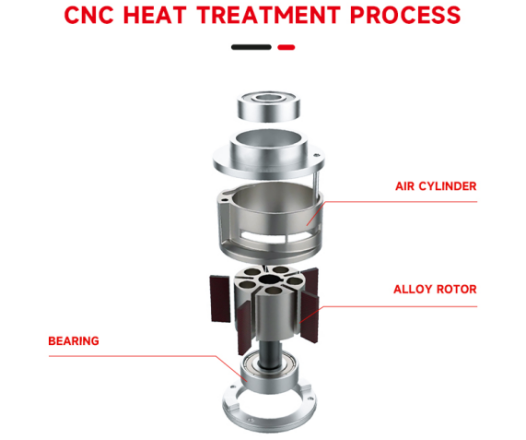
What powers the Orbital Sander series, which typically comes in 5-inch or 6-inch sizes, is an internal system that uses an all-steel rotor, a wear-resistant quenched alloy cylinder and a high-density fiber blade. You can adjust the air intake and rotation speed, a feature that makes it versatile while it runs quietly. This is the air tool you would use for jobs like removing rust from metal or sanding wood.
The Belt Sander series splits into two types: the Finger Belt Sander and the Tank-type Belt Sander. The Finger Belt Sander works with a high-frequency left-and-right swing, a motion that holds deviation within a precise 3mm. That's why people often choose it for sanding items like lattices, decorative screens, entryway or car wheel hubs. The Tank-type model, on the other hand, sands with a linear belt motion, which is how it handles work like metal wire drawing, the processing of denim jeans, or smoothing welded seams.
The entire Triangle & Rectangle Sander series operates on vibration. These sanders have sanding pads whose shape is either triangular or rectangular. The triangular sander gets into tight spaces and corners that are difficult to reach, while the rectangular version covers the broad areas of wood panels that a carpenter needs to sand.
Finally, the Mini Polishing Sander, whose size usually stays between 1 and 4 inches, is what you need for applying car wax or for any fine polishing work.
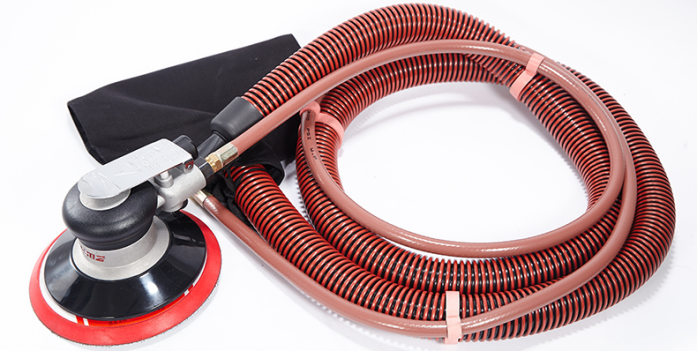
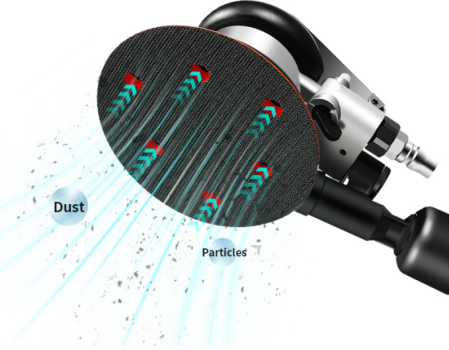
Some WYMA sander models feature self-vacuuming or central-vacuuming, which collects most of the sanding dust and particles into a collection bag. This prevents dust and particles from flying everywhere. For more information, please visit our product details page or contact our dedicated customer service team.
This tool runs reply on the air compressor, which means it keeps away from power sources, preventing sparks and electrical leakage, making it safer to use.
It delivers a rotational speed that can exceed 12,000 RPM and it maintains this power output consistently without fluctuation. Furthermore, the pneumatic tools are generally much lighter than the electric tools, this is a key advantage for long and demanding work sessions. While electric sanders will overheat under heavy loads, this air-powered tool generates no motor heat, a characteristic that makes it better suited for the demands of industrial-grade sanding.
The very nature of pneumatic tools, which function on compressed air, creates a natural opportunity for integrated dust extraction—a feature that electric tools often lack. This provides an effective way to manage the problem of flying dust and debris.
As the saying goes, simpler structures are more durable, while more complex structures are more prone to failure. Pneumatic tools versus electric tools are a vivid example of this. Their mechanical structure is generally simpler than that of electric tools, so the failure rate is very low, and daily maintenance can be completed by simply dripping 2-3 drops of pneumatic tool grease into the air inlet before or after use.
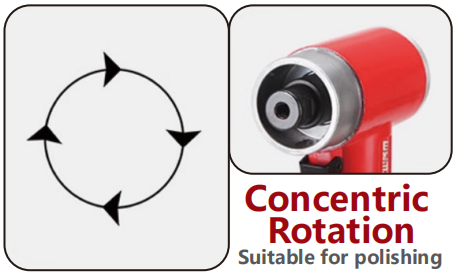
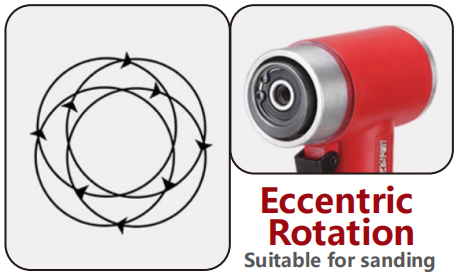
The Mini Polishing Sander series offers both concentric and eccentric models. Our sanders have an eccentricity parameter, Orbital Dia.. If this parameter is equal to 0mm, the sander's sanding pad's center of gravity coincides with the center of rotation, resulting in a purely circular motion around the center of the circle. While concentric rotation offers a stable and predictable trajectory, it also results in relatively low sanding efficiency, making it ideal for fine polishing and car waxing. When this parameter is greater than 0mm, the sander's sanding pad's center of gravity deviates from the center of the circle by a corresponding amount, performing a regular, oscillating, compound circular motion. While controlling an eccentric style sander requires certain skills, it offers larger sanding power and efficiency than the concentric style, making it ideal for rapid material removal.
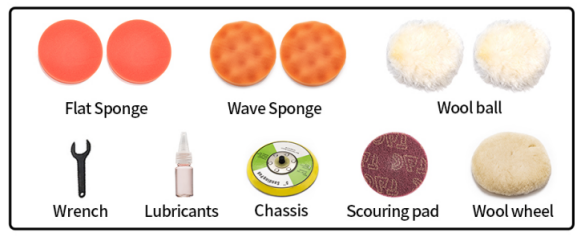
Of course! We offer a variety of shapes and sizes of sanding pads, sandpaper, and other common sanding accessories to ensure they match the sander you purchased. WYMA is here to help you achieve true multi-purpose use with only one sanding machine.

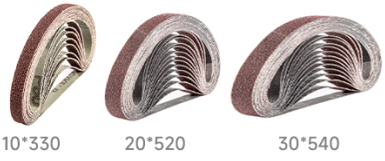
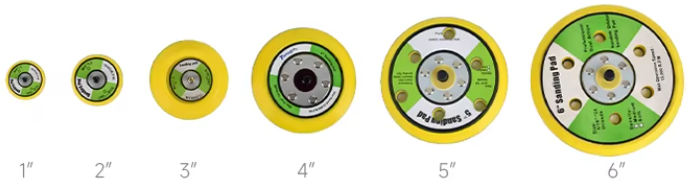
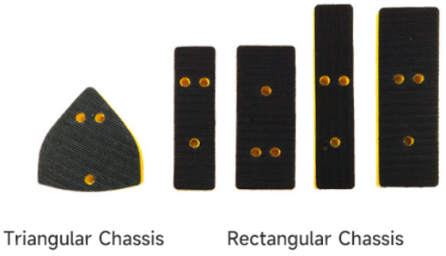
The main parameters are Free Speed, Orbital Diameter and Disc Size. Free Speed represents the rotation speed of the sander when it is unloaded, and the unit is usually RPM. It determines the grinding speed and efficiency. The higher the rotation speed, the faster the grinding speed and efficiency. Orbital Diameter represents the rotational eccentricity of the sander, and the unit is usually mm. The parameter is equal to 0mm for concentric rotation and greater than 0mm for eccentric rotation. The larger the value, the higher the eccentricity, which reflects the fineness of grinding and the surface treatment effect. The smaller the amplitude, the finer the grinding. This is why we say that concentric rotation sanders are more suitable for fine grinding, while eccentric rotation sanders focus on rapid material removal. Disc Size determines the grinding area and work efficiency, and the unit is usually inches. The larger the size, the larger the single grinding area and the higher the work efficiency.
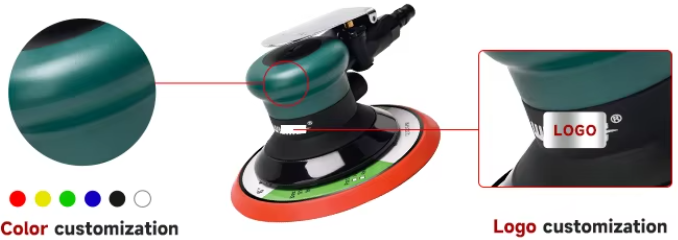
All of our Air Sanders are certified by the European Union Mechanical MD-CE standard, ensuring safety, reliability, and durability. All models showed on our website are in stock, and we offer a variety of custom options, including color, logo, rotor material, bearing manufacturing process and cylinder manufacturing process. Please contact our professional service team to discuss quantity requirements and specific customization details.

You can click "Send Inquiry" on the top of the product introduction page of our website to jump to the inquiry content form to send us an inquiry. Our staff will reply to you as soon as possible to communicate the details and tell you how to place an order. Alternatively, you can contact us through the following contact information.
For 24 hours contact details as below:
Email:
sales01@wymatools.com / sales03@wymatools.com
Tel / WhatsApp / Wechat:
+86-133 6036 8438 / +86-136 2252 8472
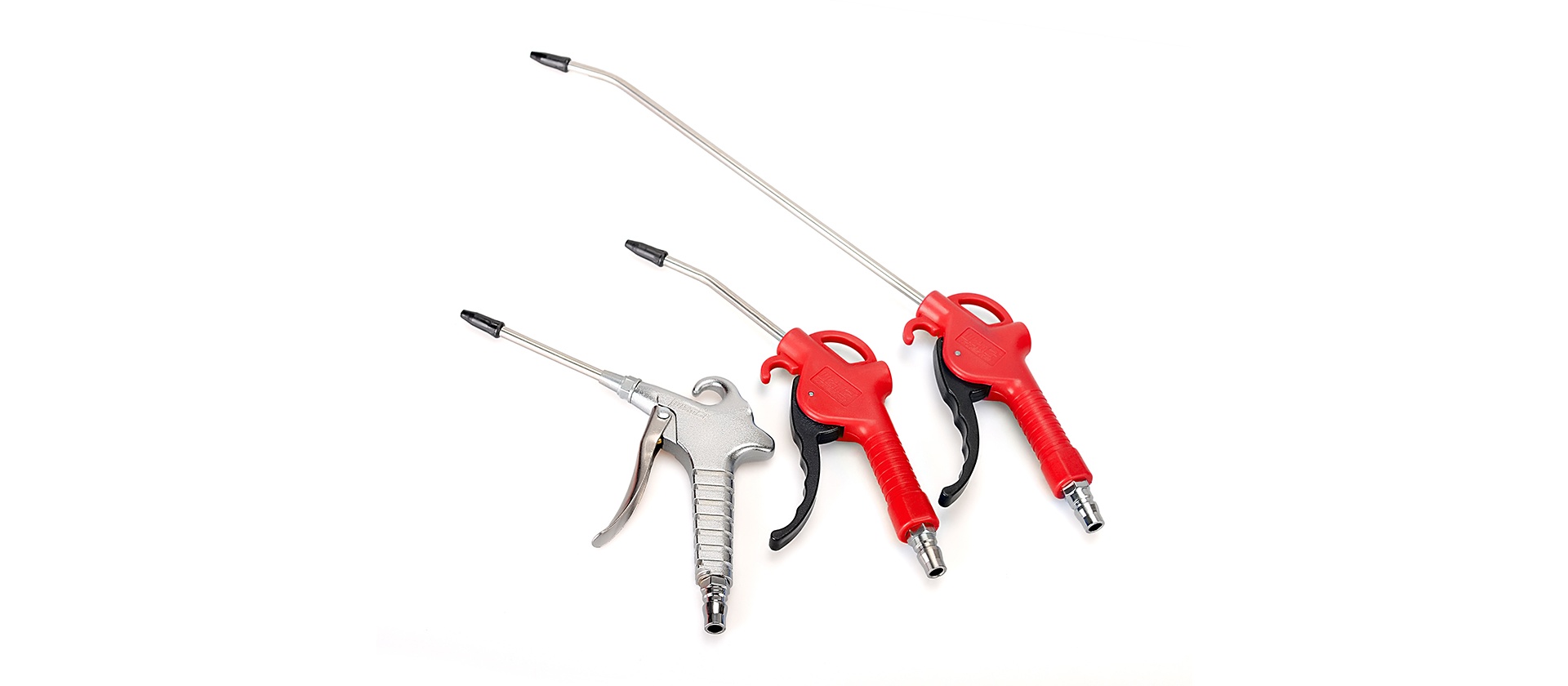
We are factory, supplying WYMA® Air Dust Blowing Gun in bulk. This product is divided into two series: the Long Nozzle Series and the Short Nozzle Series, totaling six models. WYMA offers the following lengths: 85mm, 93mm, 95mm, 98mm, 160mm, and 290mm. Long Nozzle series nozzles are generally longer than 150mm and are primarily used for computer case cleaning, lathe cleaning, dredge holes, automotive engine dust removal and cleaning the demanding narrow gaps in mechanical equipment. Short Nozzle series nozzles are generally less than 100mm in length and are primarily used for impurity separation, computer motherboard dust removal, workshop dust removal and general equipment cleaning.
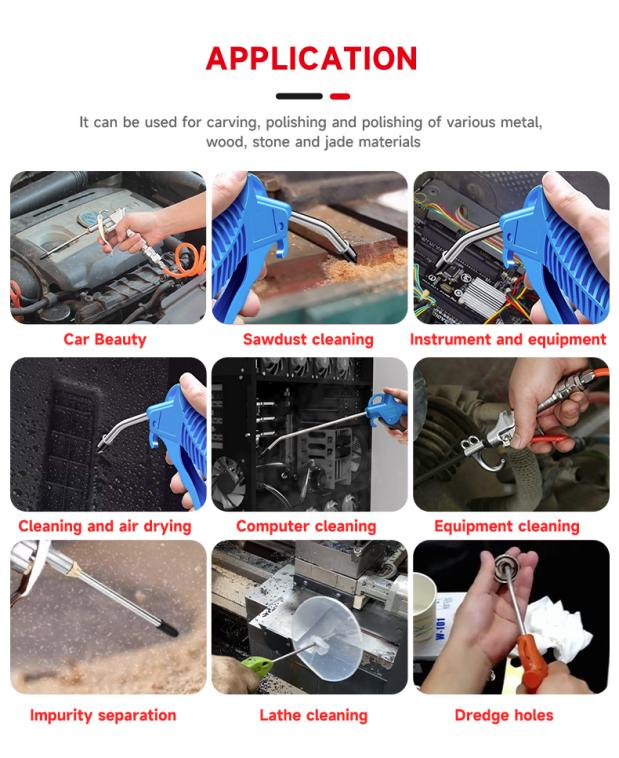
Our Air Duster is available in three materials: aluminum alloy, engineering plastic, and stainless steel. Generally speaking, metal is stronger and more resistant to drop and wear than plastic, making it more suitable for harsh industrial environments. In terms of weight, plastic is more compact and lightweight, making it less tiring for operators to use for extended periods of time. Of the three materials, stainless steel performs better in humid or corrosive environments. In addition, all models feature a stainless steel ventilation rod and hook design, the handle is ergonomically designed, and thanks to the larger force-bearing area, it maximizes grip comfort and significantly reduces fatigue during long-term operation.
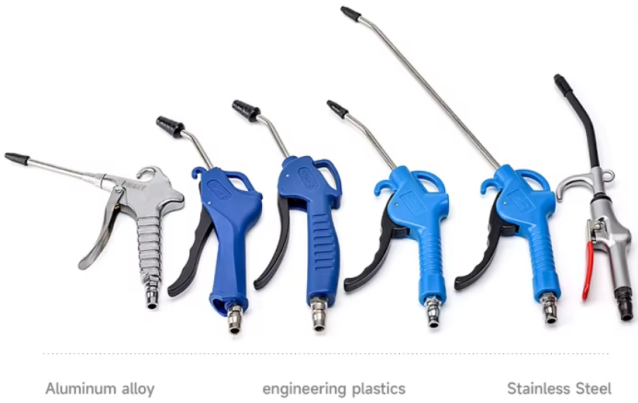
The main performance parameters of a dust blow gun are air pressure and air consumption. Air pressure determines the required air pressure range of the air source (e.g., an air compressor). If the air pressure is too low, the blow gun will not produce enough force; if it is too high, it may damage the gun or become unsafe. Generally speaking, the higher the operating pressure, the greater the blowing force and the better the cleaning effect. Air consumption is also an important factor in selecting an air compressor. Dust blow guns with high air consumption require a higher-powered air compressor with a larger air tank to maintain a stable air supply. Failure to do so will result in frequent compressor startup or pressure drops, seriously affecting work efficiency.
Yes, we have all the models shown on our website in stock. We also offer custom colors and logos. If you're interested in our products, please contact our professional team to discuss quantity requirements and other custom details.
You can click "Send Inquiry" on the top of the product introduction page of our website to jump to the inquiry content form to send us an inquiry. Our staff will reply to you as soon as possible to communicate the details and tell you how to place an order. Alternatively, you can contact us through the following contact information.
For 24 hours contact details as below:
Email:
sales01@wymatools.com / sales03@wymatools.com
Tel / WhatsApp / Wechat:
+86-133 6036 8438 / +86-136 2252 8472
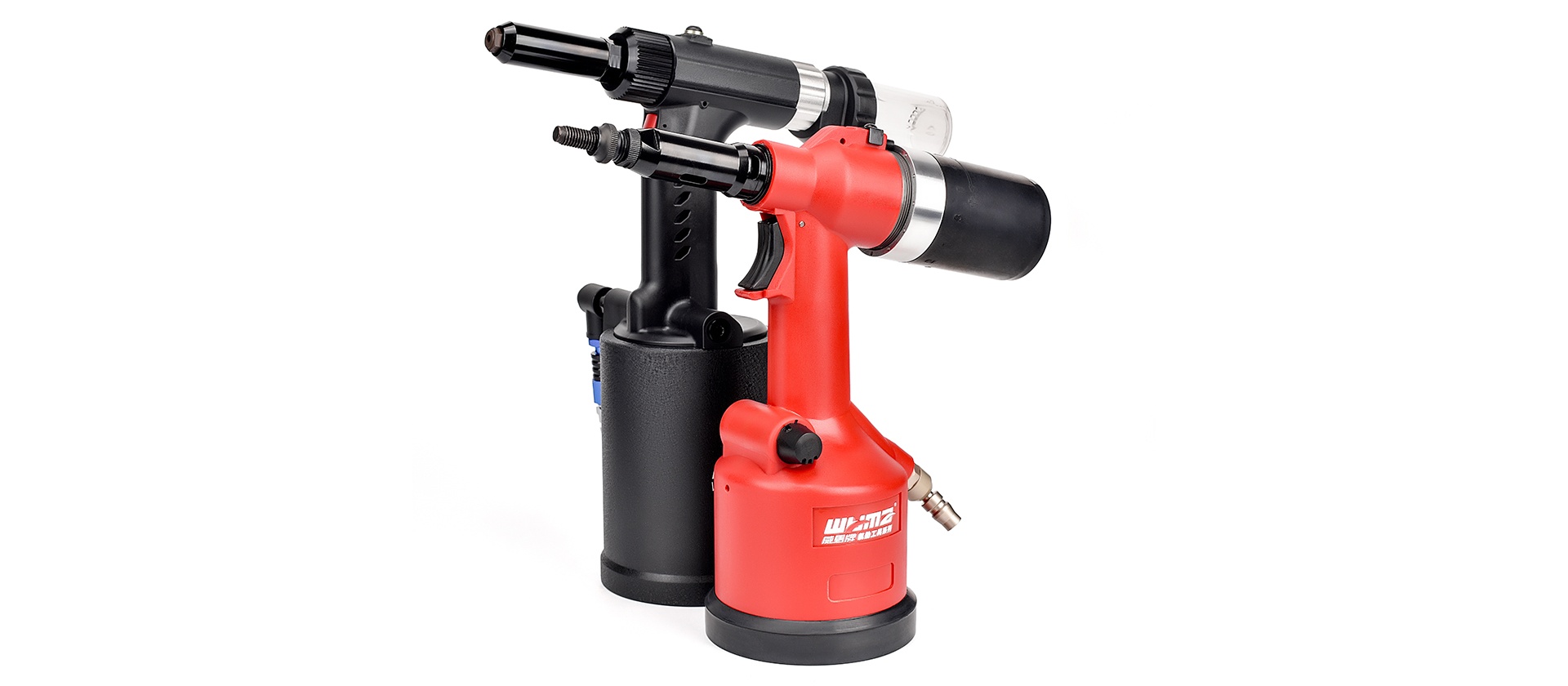
WYMA® now offers our two pneumatic riveter lines for wholesale distribution: the Air Rivet Nail Gun series and Air Rivet Nut Gun series.
Our Air Rivet Nail Gun offers multiple models with pulling force ranging from 2350N to 17000N. This series consists of pneumatic riveting tools designed for setting pop rivets. It uses the strong pulling force generated by compressed air to pull the mandrel of the pop rivet until it breaks, causing the rivet body to expand and deform on the back of the workpiece, thus creating a secure riveted joint. This series proves helpful in furniture manufacturing, door and window production, luggage making, automotive interior assembly, and the assembly of other industrial equipment.
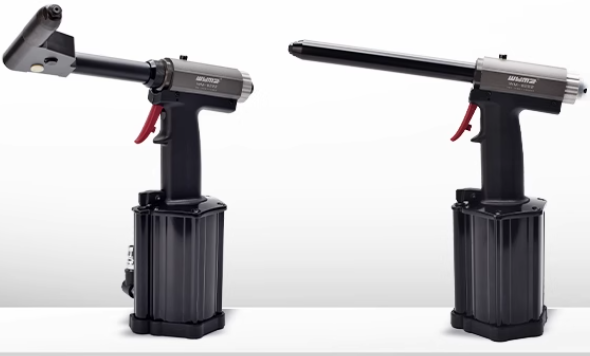
The Air Rivet Nut Gun is a series of pneumatic riveting tools designed for setting rivet nuts. Our company produces two products in this series with different drive principles, specifically the pistol-grip air rivet nut gun and the hydraulic air rivet nut gun, which require separate discussion.
The Pistol-grip Air Rivet Nut Gun is a riveting tool powered directly by compressed air. It relies compressed air to drive the air cylinder, generating a longitudinal tension on the screw that pulls the rivet nut. Its working pressure is relatively low and is suitable for applications where high riveting force is not required and space is limited, such as door and window manufacturing, the decoration industry and the luggage industry. Routine maintenance requires only regular lubrication and a clean air source.
The Hydraulic Air Rivet Nut Gun is a riveting tool powered by high-pressure hydraulic oil. Operating at higher pressure than pistol-grip type, it uses compressed air to drive the hydraulic cylinder, generating instantaneous high pressure in the hydraulic oil system, which drives the screw longitudinally, pulling the rivet nut. This air-to-oil pressurization principle enables fast operation and high pressure. It is primarily used for riveting large-diameter, high-strength rivet nuts (such as SS nuts) and is suitable for high loads and continuous, high-intensity operations, such as the automobile manufacturing, shipbuilding and machinery manufacturing industries. Compared with pistol-grip type, daily maintenance also requires attention to the condition of the hydraulic oil.
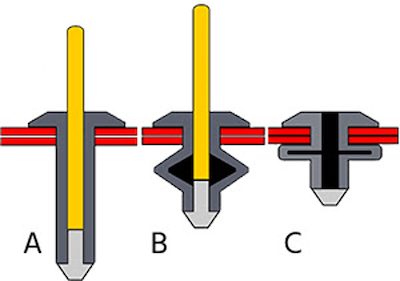
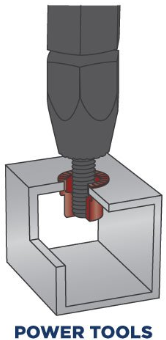
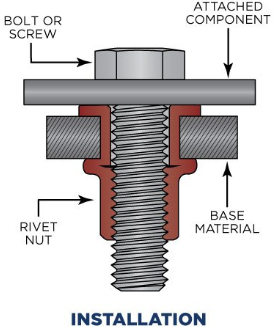
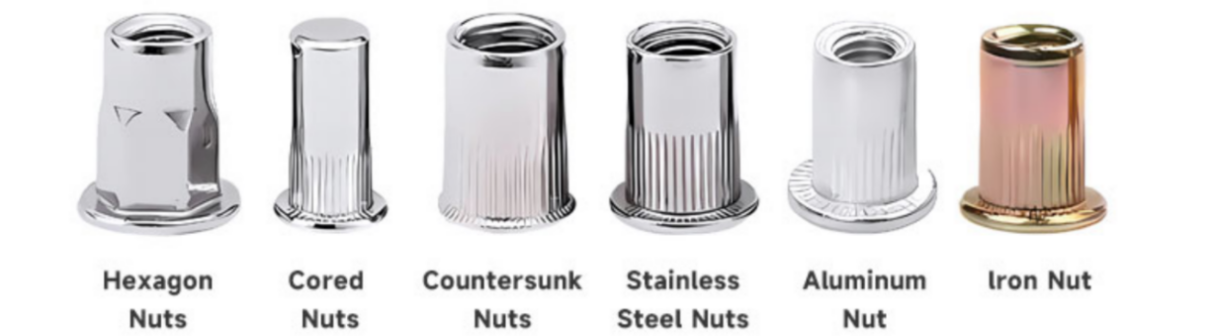
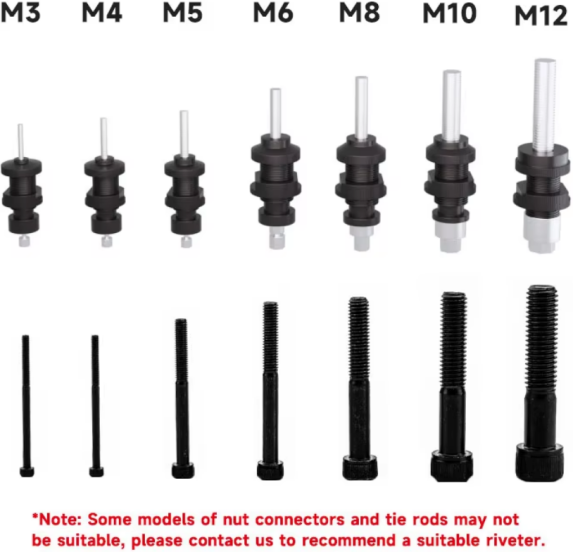
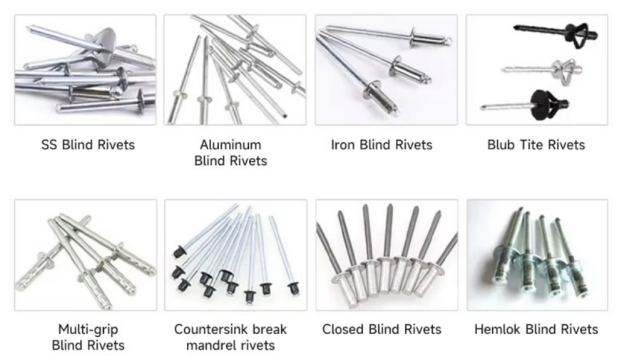
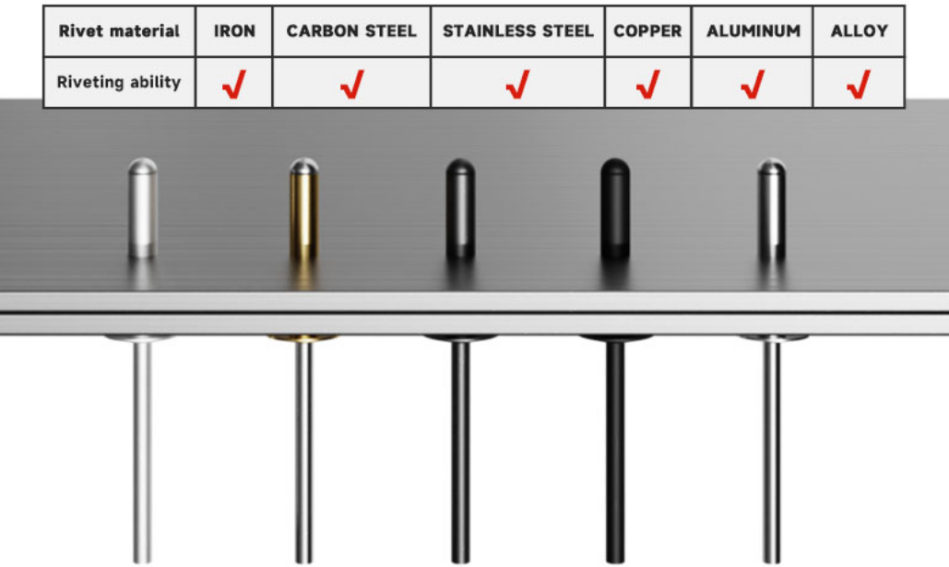
Our Pneumatic Pop Rivet Gun series accommodates rivet materials including copper, iron, aluminum, alloy, carbon steel and stainless steel. The compatible rivet types are Blub Tite Rivets, Multi-grip Blind Rivets, Countersink Break Mandrel Rivets, Closed Blind Rivets and Hemlok Blind Rivets. For the Pneumatic Rivet Nut Gun series, WYMA offers self-locking heads (pistol-grip type and hydraulic type) designed for rivet nuts in 7 sizes: M3, M4, M5, M6, M8, M10, M12. When paired with a rivet nut tool, enable fastening of rivet nuts of various dimensions. The compatible rivet nut materials include copper, iron, aluminum, zinc-plated, alloy, carbon steel and stainless steel, while the supported rivet nut types are Hexagon Nuts, Cored Nuts, and Countersunk Nuts.
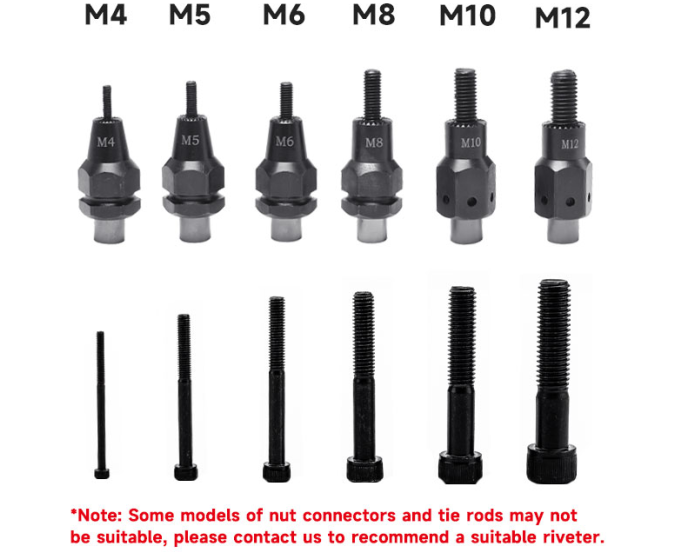
The jaws of the pop rivet gun can be replaced using two methods, a traditional one and a quick one, so choose the approach that suits you.
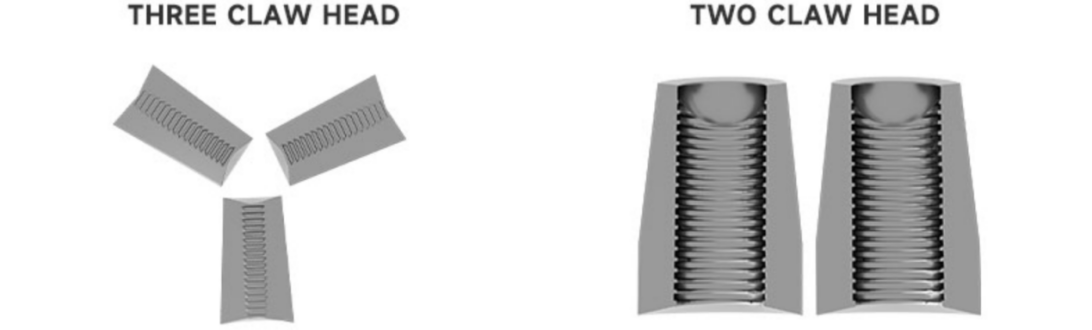
Let us begin with the traditional method. First, use the included wrench to unscrew the outer sleeve. Next, with one hand, hold the nut at the rear end of the spring sleeve using the included wrench, while with the other hand, take another wrench to turn the front end of the clamping sleeve counterclockwise; apply reverse force with both hands to remove the clamping sleeve. After that, take out the old jaw pieces and place the new ones into the clamping sleeve one by one, making sure each piece is positioned correctly. When installing the third jaw piece, you may use tweezers and carefully check whether the jaw piece positions align. Once confirmed correct, screw the clamping sleeve with the installed jaw pieces back onto the spring sleeve, and finally reattach the outer sleeve to complete the replacement.
Now is the quick method. First, unscrew the outer sleeve, then pull the quick-change slide sleeve backward to disengage it from the groove. Next, directly unscrew the clamping sleeve, remove the old jaw pieces, and insert the new ones, again ensuring each piece is placed correctly. When installing the third jaw piece, use tweezers and observe whether the jaw piece positions match. After installation, screw the clamping sleeve back onto the spring sleeve, pull the quick-change slide sleeve backward once more, and let it click into the groove of the clamping sleeve at the most fitting position. Finally, reattach the outer sleeve to finish the replacement.
When using the rivet gun for the first time after purchase, before properly adjusting it, you might encounter a situation where the nut doesn't automatically retract. This is usually due to excessive stroke or the material being riveted being too thick, preventing the rivet gun from completing a effective single work. Simply reducing the stroke will solve the problem. After reducing the stroke, the rivet gun will complete the effective single work, and the nut will automatically retract.
If the rivet gets stuck, you need to adjust the stroke. If the mandrel cannot retract after breakage, it's because the stroke is too short. You need to move the stroke adjusting nut forward to lengthen the stroke. If the mandrel only breaks after multi-riveting, it's because the stroke is too long. You need to move the stroke nut backward to shorten the stroke.
WYMA provides specialized extended turning anvils and extended anvils. When used together with the standard Nail Rivet Gun, they can solve the problem of being unable to perform riveting operations in confined spaces. However, they currently only fit the following models, so please note when making a purchase: WM-8221/WM-8221V/WM-8222/WM-8222V.
Certainly! Let us take an example. When riveting a standard length rivet nut, the nut compresses very tightly. But if we want to rivet an extra-long rivet nut twice the length of a standard one, you will notice a wide gap remains in the middle and it cannot compress very tightly. The reason lies in the limited riveting stroke of the rivet nut gun, which means for rivet nuts longer than the rivet nut gun’s stroke, during single stroke riveting work, it cannot compress the extra-long nut into the effective riveting range. Given this, when riveting extended rivet nuts to ensure the nut is riveted tightly enough, the correct approach is to rivet two or even more times.
The Air Nail Riveter is compatible with guide nozzles in sizes 2.4/3.0/3.2/4.0/4.8/5.0/6.4 (mm), as shown in the image below.
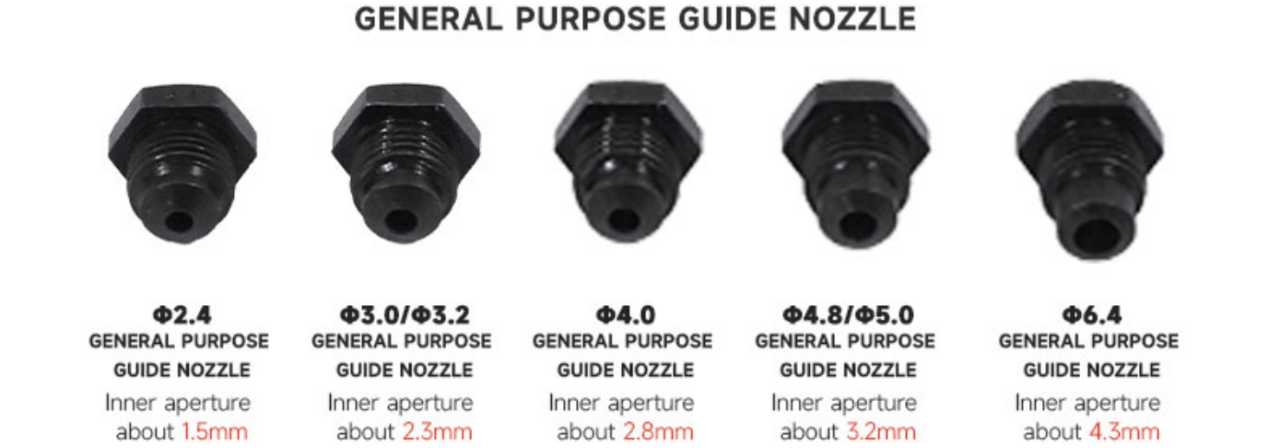
We highly recommend the WM-8224V, WM-8225, WM-8226, WM-8227, and WM-8228V models. These models provide stronger pulling force, which make them easier to handle rivets made of various hard materials. Besides rivets of regular materials, they can also rivet SS Hemlok Blind Rivets.
The parameters differ between the two series.
The Pneumatic Nail Riveter series focuses on Pull Force, Stroke and Rivet Capacity. Pull Force is the core specification for any Air Nail Riveter, it represents the max pulling force that this riveting tool can generate, usually measured in Newtons(N). This specific value dictates the diameter and material of rivets that you can install with the device. When you work with harder materials like stainless steel or larger diameter rivets, you must use higher force to break the mandrel successfully. If the tool lacks sufficient force, it fails to break the mandrel and results in a failed installation. Stroke refers to the max distance the jaws of an Air Nail Rivet Gun can move backward during single-riveting work, which technicians measure in millimeters (mm). This metric influences work efficiency and compatible rivet lengths. A sufficient stroke ensures the tool breaks the mandrel of a standard rivet in one go. When the stroke proves too short for longer rivets, the operator must pull the trigger twice or more to complete an effective riveting, which slows down work efficiency. Rivet Capacity specifies the exact size range the tool handles. Manufacturers measure this by the rivet head diameter, such as 3.2mm, 4.0mm, or 4.8mm. This parameter gives users the most direct reference to match the tool with their daily operational needs.
In contrast, the Pneumatic Rivnut Gun series relies on just two main parameters: Rivet Range and Stroke. Rivet Range defines the spectrum of rivet nuts the tool installs, expressed through metric internal thread sizes like M3, M4, or M5. This stands as the primary factor when selecting a nut gun because it dictates the size of the internal threaded hole you create in the workpiece. Different nut sizes require that you swap the corresponding mandrels and nosepieces. Like the nail riveter, Stroke here refers to the distance the mandrel retracts during a single riveting work cycle. However, precise stroke control matters even more for nut guns as it governs the deformation amount and the final quality of the joint. Setting the stroke too short results in insufficient deformation and a loose fit, setting it too long damages the thread or breaks the nut entirely. Consequently, high-end rivet nut guns usually come with adjustable stroke settings to accommodate plates of different thicknesses and different types of rivet nuts.
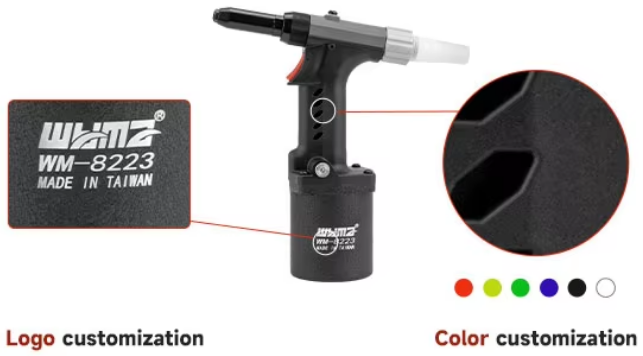
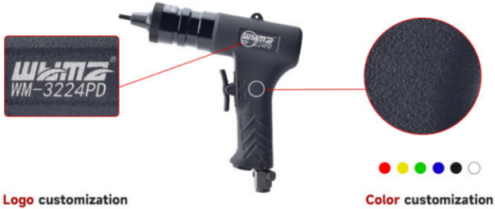
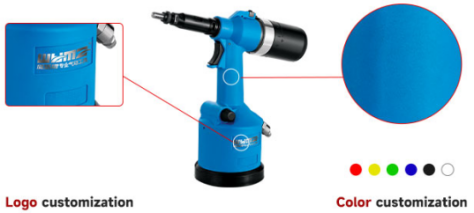
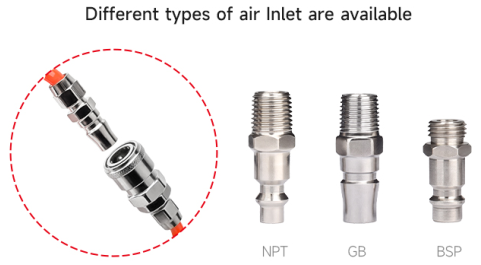
All our Air Riveters pass the EU MD-CE certification, offering safety, reliability and long-term durability. The models displayed on our website are all in stock. We provide ample accessories including guide nozzles(2.4/3.2/4.0/4.8/5.0/6.4 mm), matching wrenches, CNC quenched thickened alloy jaw heads, multi-standard air inlet connectors(NPT, GB, BSP), special hydraulic oil and pneumatic tool lubricating oil. We also support color customization and logo customization and you are welcome to discuss order and specific customization details with our pro service team.
You can click "Send Inquiry" on the top of the product introduction page of our website to jump to the inquiry content form to send us an inquiry. Our staff will reply to you as soon as possible to communicate the details and tell you how to place an order. Alternatively, you can contact us through the following contact information.
For 24 hours contact details as below:
Email:
sales01@wymatools.com / sales03@wymatools.com
Tel / WhatsApp / Wechat:
+86-133 6036 8438 / +86-136 2252 8472
Foshan WYMA Pneumatic Tools Co., Ltd.

WYMA® is a manufacturer and supplier in China, specializing in the production of Pneumatic Diaphragm Pump, Pneumatic Grease Pump and Air Impact Wrench, etc. Our factory offers quality and durable products with competitive price. Welcome to place an order.
We enhance our competitiveness by exploring new markets and developing new products. We always keep in mind the needs of our customers and the expectations of our end users to optimize our product design and services.
Pneumatic sanders are tools used for surface treatment, polishing and grinding, and are commonly used in automobile repair, metal processing, woodworking and furniture manufacturing.

A pneumatic grinder is a tool used in metalworking, woodworking, and masonry, and is often used to remove surface dirt, grind, polish, and trim workpieces.

Pneumatic impact wrench is a tool that uses the high-speed rotational force generated by compressed air to apply impact force to tighten or loosen screws and bolts.
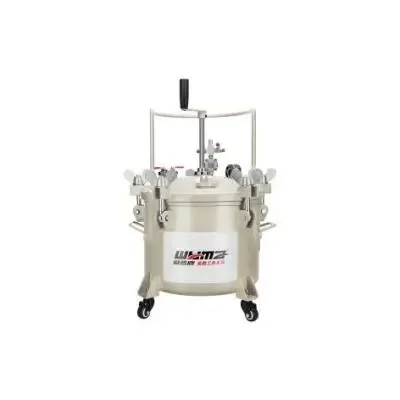
As a professional pneumatic tools manufacturer, WYMA provides reliable Manual Air Pressure Spray Paint Tank solutions designed for automotive refinishing, woodworking, metal fabrication, industrial maintenance, and furniture coating applications. With stable pressure control, efficient paint delivery, and durable construction, these tanks help users achieve uniform finishes while reducing material waste and improving productivity.

The 20L/5gal Pneumatic Grease Pump is an efficient lubrication solution designed for automotive repair shops, machinery maintenance, construction equipment servicing, and industrial applications. Developed by WYMA, this pneumatic grease pump combines stable air-powered operation, high-pressure grease delivery, and convenient mobility to help professionals reduce manual labor and improve lubrication accuracy.

A Short Nozzle Air Blow Gun is an essential pneumatic tool designed for efficient cleaning, drying, and debris removal in industrial environments. With its compact structure, concentrated airflow, and easy operation, it helps operators achieve precise air control in workshops, assembly lines, automotive maintenance, and manufacturing applications.
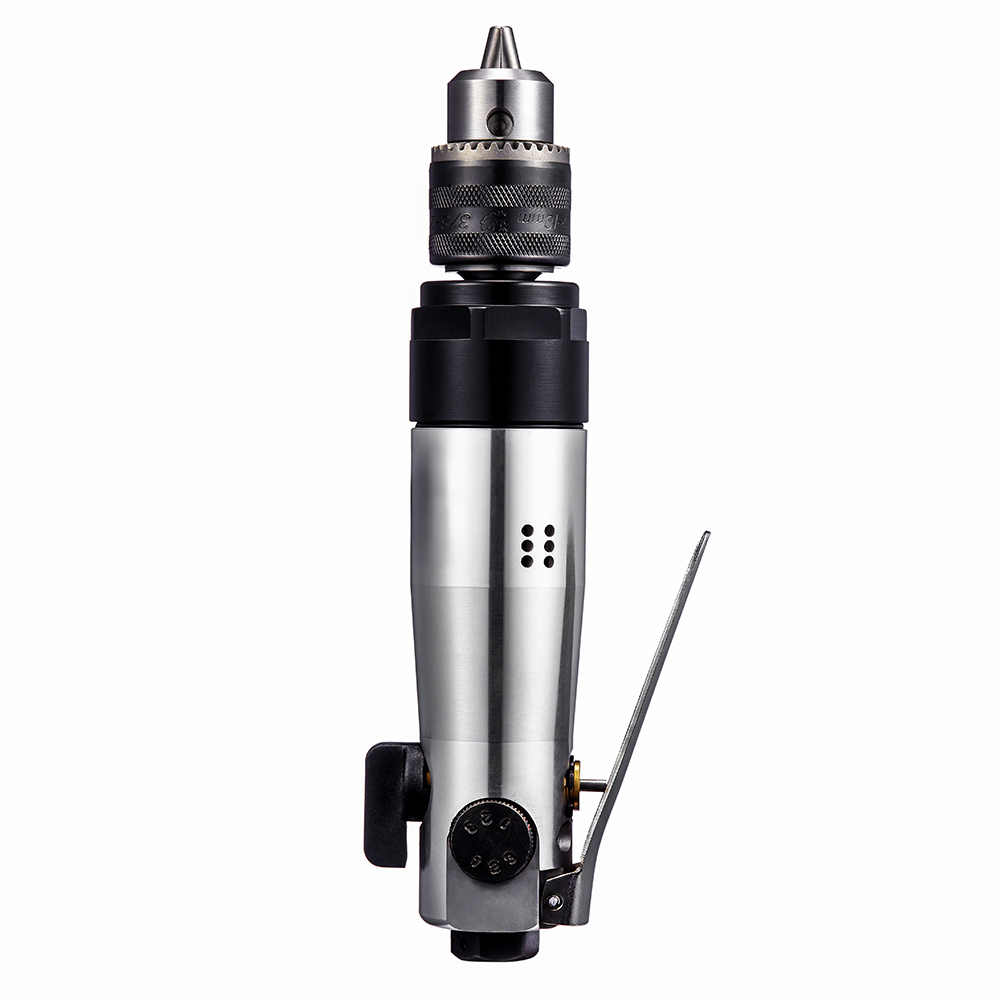
A reliable pneumatic drilling tool can significantly improve productivity, accuracy, and safety in professional workshops and industrial applications. The 3/8 inch Air Drill from WYMA is designed with stable pneumatic power, compact structure, and versatile performance to meet the needs of automotive repair, metal fabrication, machinery maintenance, and other demanding working environments. This guide explains the key features, advantages, specifications, applications, and purchasing considerations of this efficient air-powered drilling solution.
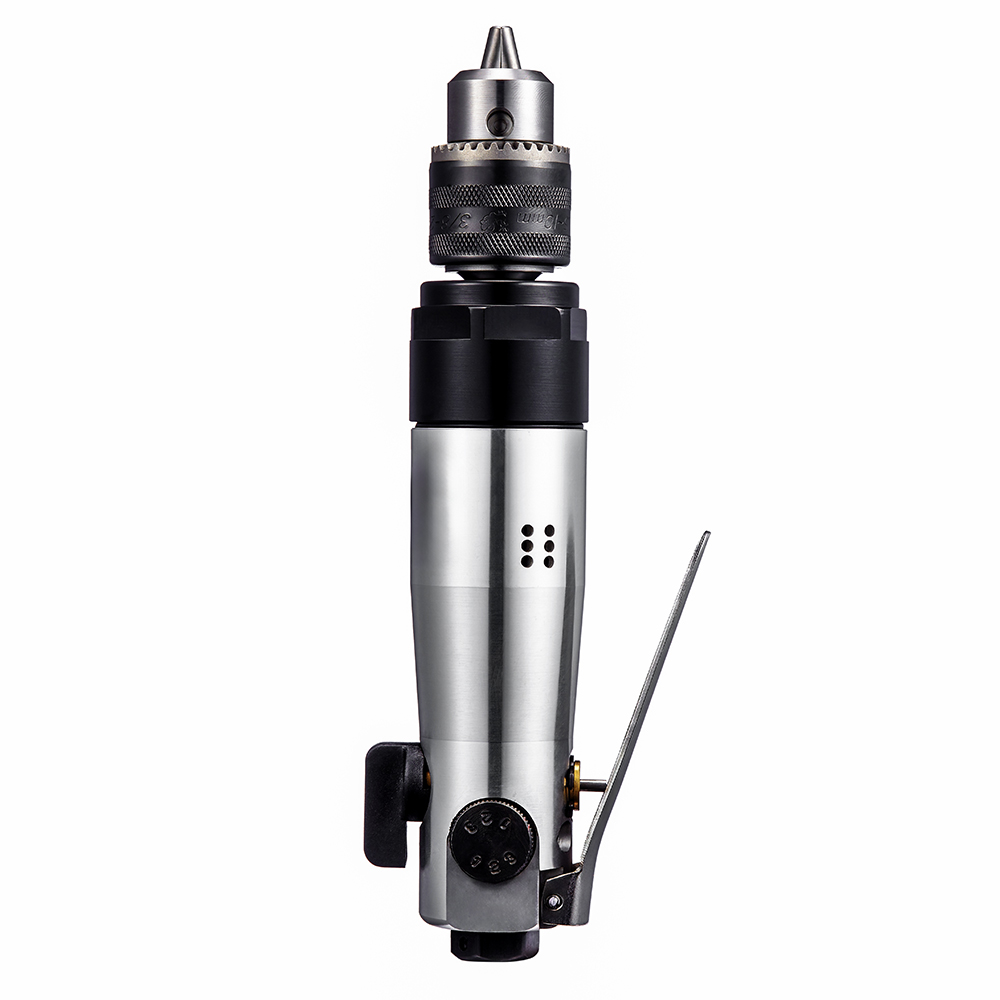
A 3/8 inch air drill is one of the most widely used pneumatic tools in automotive repair, metal fabrication, woodworking, and industrial maintenance. In this article, we explore its performance, features, advantages, and selection tips. We also include technical comparisons and practical insights from WYMA, a professional pneumatic tools manufacturer, to help you understand whether a 3/8 inch air drill is the right fit for your workflow.

In modern industrial environments, fluid handling systems must deliver reliability, chemical resistance, safety, and cost efficiency. The PP Plastic Pneumatic Diaphragm Pump has become one of the most trusted solutions for transferring corrosive chemicals, wastewater, acids, alkalis, solvents, slurries, and other challenging fluids. As a professional fluid transfer equipment manufacturer, WYMA provides high-quality PP Plastic Pneumatic Diaphragm Pump solutions designed for demanding industrial operations.

In modern manufacturing, automotive repair, furniture assembly, aerospace maintenance, and industrial production, efficiency and precision are essential. An Air Right Angle Screwdriver is specifically designed to access confined spaces where conventional screwdrivers cannot operate effectively. As a trusted pneumatic tool manufacturer, WYMA provides high-performance Air Right Angle Screwdriver solutions that help professionals improve productivity, reduce operator fatigue, and achieve consistent fastening results.

The 20L/5gal Pneumatic Grease Pump by WYMA is revolutionizing the way industries handle lubrication. In this article, we will explore its features, applications, technical specifications, and the reasons it stands out in the market. Whether you are looking to optimize efficiency, improve safety, or reduce operational costs, this guide covers everything you need to know about this high-performance grease pump.

Lubrication looks simple until it starts slowing down production, wasting grease, or leaving critical points half-serviced. That is where a Pneumatic Grease Pump becomes more than a workshop accessory.
